

Engineered Hardwood vs Vinyl Plank: Which Floor Fits Your Home?
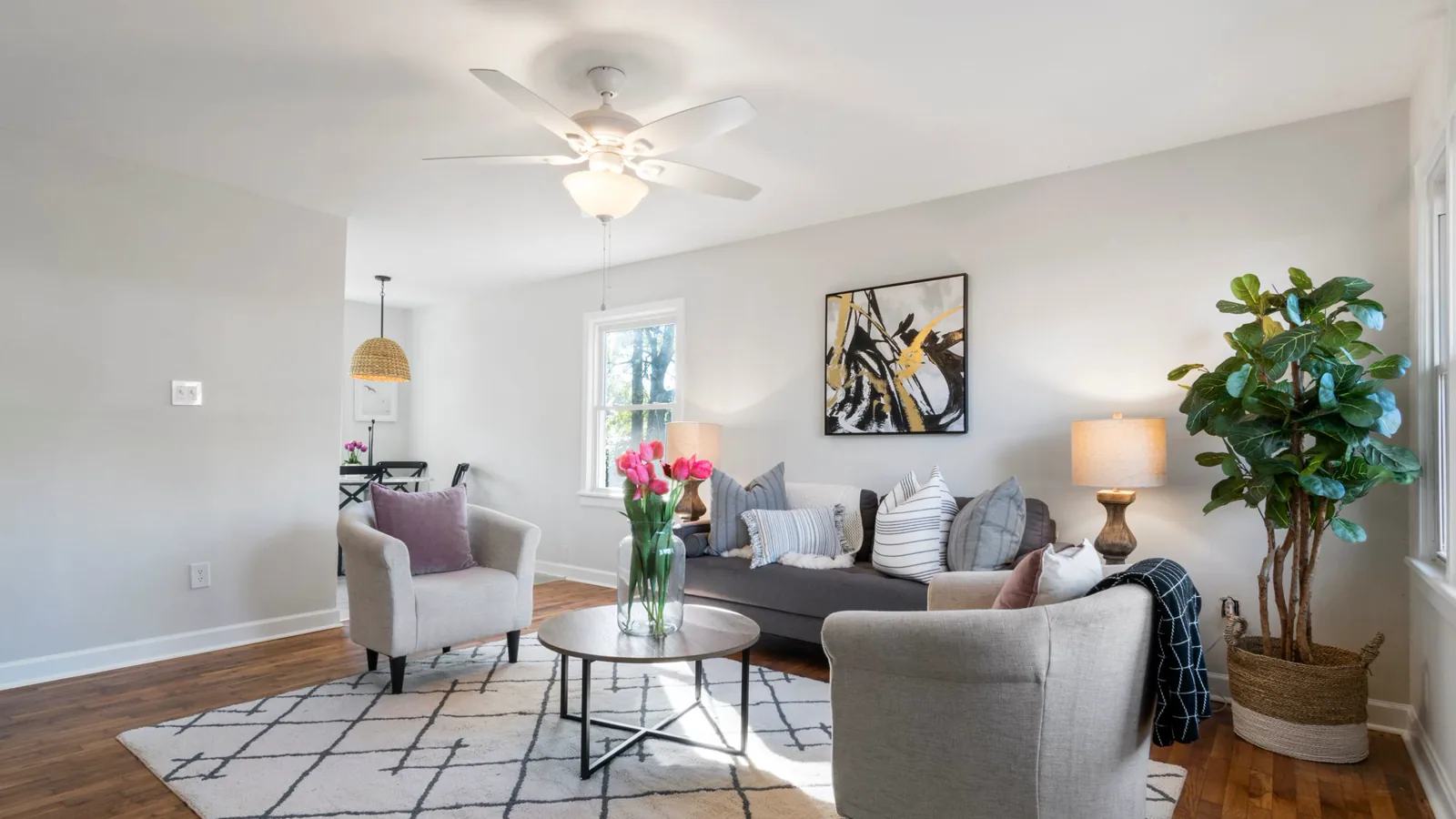
Engineered hardwood vs vinyl plank comes down to how much you value real wood against a floor that ignores water. Choose rigid-core vinyl plank for basements, kitchens, entries and busy homes with pets. Choose engineered hardwood for living rooms and bedrooms where you want the warmth of real wood and the option to sand it again in the future.
From across a room the two can look alike. Both come in wide planks, both suit a concrete slab or a plywood subfloor, and both float or glue down. The differences show up under bare feet, under a spilled glass and ten years into ownership. This guide compares them point by point, then matches each one to the rooms in a typical GTA house or condo.
What is the difference between engineered hardwood and vinyl plank?
The names sound close, but the two floors share almost nothing below the surface.
Engineered hardwood: real wood on a stable core
An engineered board has a top layer of sawn or sliced hardwood, such as white oak, hickory or maple, bonded to a core of cross-laid plywood or high-density fibreboard. The top layer is the floor you see and walk on. The core keeps the board from swelling and shrinking as much as a solid plank does. The National Wood Flooring Association explains that engineered wood can be sanded and refinished, though fewer times than solid wood. How many times depends on the thickness of that top layer.
Vinyl plank: a photograph under a clear shield
Luxury vinyl plank stacks a printed wood image under a clear wear layer, on top of a vinyl core. The rigid-core versions most homeowners buy today use a dense stone-plastic core (SPC) or a lighter foamed core (WPC), and many arrive with a pad attached to the back. The Resilient Floor Covering Institute describes how SPC cores resist dents and hold their size through temperature changes. There is no wood in it, so there is nothing to sand. When the wear layer wears through, the plank is done.
How do engineered hardwood and vinyl plank compare side by side?
This table sums up the trade-offs. The sections below explain each row.
| Factor | Engineered hardwood | Rigid-core vinyl plank |
|---|---|---|
| Look and feel | Real grain, warm and solid underfoot | Printed wood look, firmer and cooler |
| Water | Copes with spills you wipe up; standing water harms it | Waterproof planks |
| Scratches and dents | Depends on the species and finish | Wear layer resists scuffs; SPC resists dents |
| Refinishing | Can be sanded if the top layer is thick enough | Cannot be sanded; worn planks are replaced |
| Basements | Only with a dry slab and moisture control | A strong fit over concrete |
| Sound | Solid when glued; depends on underlay when floated | Depends on the underlay; can sound clicky |
| Resale | Listed as hardwood | Seen as practical, valued in basements and rentals |
| Lifespan | Decades, with care and refinishing | Set by the wear layer |
Is vinyl plank better than engineered hardwood for water?
Yes, and by a wide margin. A rigid-core vinyl plank will not swell if a dishwasher leaks or a dog tips its bowl. You can wipe up a puddle an hour later and the plank looks the same. Water can still slip through the seams to the subfloor, so a slow leak needs fixing at the source, but the planks themselves survive.
Engineered hardwood is more forgiving than solid wood and less forgiving than vinyl. A spill you wipe up within minutes does no harm. Water left to sit soaks into the seams, and the board edges rise, a problem installers call cupping. Snowmelt is the usual culprit in a GTA home. Boots dripping salt and slush onto a wood floor by the front door, all winter, will grey the finish and lift the edges of the first few rows.
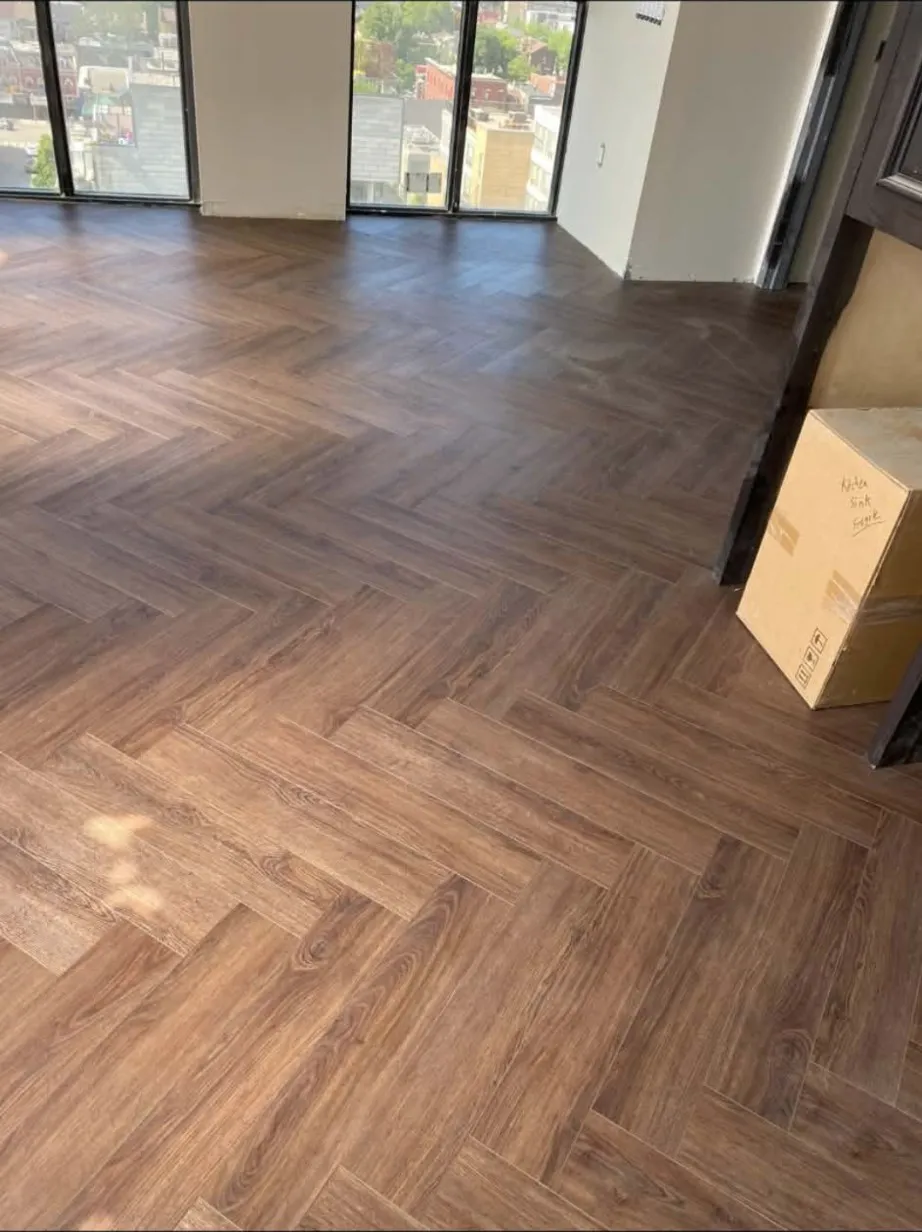
For a mudroom, a kitchen with a sink island or a laundry area, vinyl is the low-stress choice. Our vinyl plank flooring service covers those rooms, along with the levelling a concrete floor needs before the planks go down.
Which resists scratches better, and which lasts longer?
Day-to-day scratches
A good vinyl wear layer holds up well against shoes, chair legs and toys. Grit is its enemy: sand tracked in from the driveway acts like sandpaper under a sliding chair. Engineered hardwood scratches according to the species and finish. Oak and hickory hold up better than walnut or cherry, and a matte or satin finish hides fine marks that a high-gloss finish shows off. Dog owners should read our guide to floors that stand up to dogs and cats before choosing a soft species.
Dents
Dense SPC vinyl resists dents from heavy furniture and dropped pans better than most wood. Engineered hardwood dents in proportion to the hardness of its top species, and a dropped cast-iron pan will leave a mark on almost any wood.
The long game
Here the order flips. Once the wear layer on vinyl wears through, you replace the planks. An engineered floor with a thick top layer can be sanded back to fresh wood and refinished, sometimes more than once, so it can outlast two or three vinyl floors. Boards with a thin veneer can only take a light buff and recoat, so ask about the top-layer thickness before you buy. If you already own wood floors, our checklist on whether to refinish or replace worn hardwood helps you judge what is left.
How do they feel underfoot, and which is quieter?
Wood feels warmer than vinyl at the same room temperature, because it draws less heat from your feet. On a ground-floor slab in February, the difference is noticeable. Vinyl on concrete feels cool and firm; a vinyl plank with an attached pad softens it a little.
Sound depends more on how the floor is installed than on the plank. Engineered hardwood glued to a slab sounds solid, close to a nailed floor. Any floating floor, wood or vinyl, can sound hollow or clicky under hard shoes if the underlay is thin. A quality acoustic underlay solves most of that. In a condo, the board sets the sound rule for both materials. We cover how that works in our guide to choosing a floor for a Toronto condo suite.
Dry winters and humid summers
Ontario homes swing from dry, furnace-heated air in January to sticky air in August. Engineered hardwood copes with that swing far better than solid wood, but it still moves a little. You may see hairline gaps in winter that close again by summer, and a humidifier on the furnace keeps them small. Vinyl does not react to humidity. It reacts to heat instead, so planks in front of large south-facing windows need the expansion space the manufacturer asks for, and blinds help on summer afternoons.
Can you put engineered hardwood in a basement?
You can, with care. Engineered boards cope with a below-grade slab far better than solid hardwood, which you should never lay in a basement. The slab must test dry, and the floor needs a moisture barrier or a dimpled subfloor beneath it. A basement with a history of seepage, a sump that runs often or a floor drain that backs up after heavy rain is a poor home for any wood. If you want wood downstairs, ask for a moisture test on the slab before you book engineered hardwood flooring installation.
Rigid-core vinyl is the easier basement floor. It floats over a membrane or underlay, tolerates the damp air of a GTA basement in July, and survives a minor flood. Many Brampton and Mississauga homeowners finishing a basement for a rental suite choose it for that reason. For a full look at below-grade options, read our basement flooring guide for GTA homes.
Which adds more value when you sell?
Buyers and listing agents still treat real wood as a step up. "Hardwood throughout the main floor" reads well in a listing for a detached house in Oakville or a semi in Leslieville, and engineered hardwood earns that line. Vinyl plank is accepted, and expected, in basements, rental suites and condos aimed at investors. A well-chosen vinyl floor beats tired carpet, but it seldom gets named as a selling point upstairs.
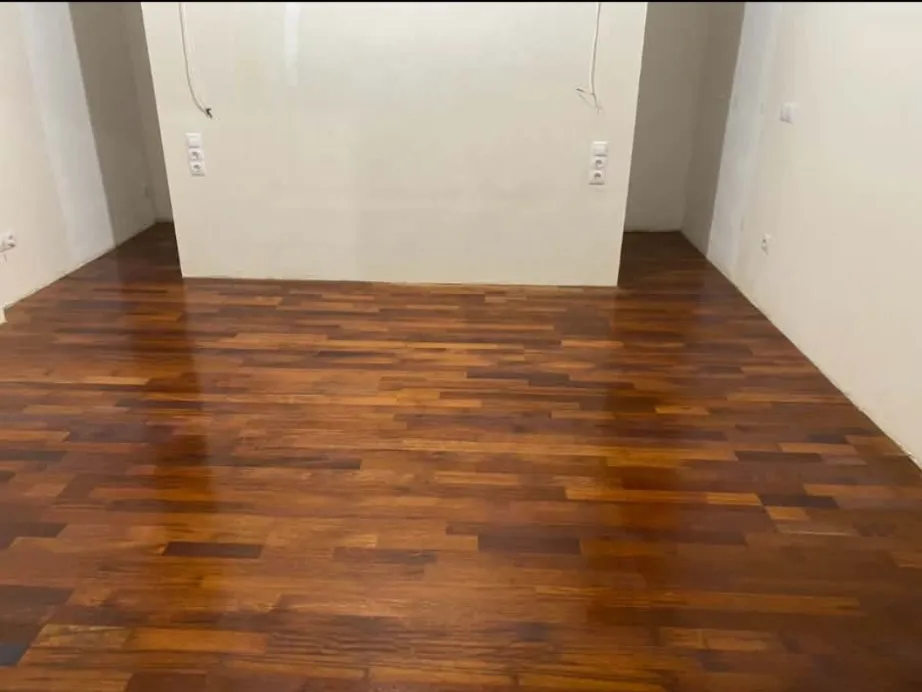
Think about how long you plan to stay. If you will sell within a few years, choose the floor that will still look fresh on listing day. If you plan to stay ten years or more, the option to refinish engineered wood starts to pay off.
Which should you choose for each room?
- Living and dining rooms: engineered hardwood, unless large dogs or young kids rule the space.
- Bedrooms and upstairs halls: engineered hardwood for warmth and quiet; vinyl if the rest of the floor is vinyl.
- Kitchen: vinyl plank for peace of mind; engineered hardwood with a hard finish if you wipe spills fast and want one floor through an open plan.
- Front entry and mudroom: vinyl plank or porcelain tile. Salt and slush ruin wood finishes.
- Basement: rigid-core vinyl in most cases.
- Rental suites: vinyl plank. It survives tenants and turnover.
Both materials run well as one continuous floor through an open plan, which matters in newer subdivisions where the kitchen, dining and family room share one space. If laminate is also on your shortlist, our laminate and vinyl comparison covers that matchup. When you have settled on wood, our hardwood flooring installers can confirm whether your subfloor suits a glue-down or floating install. Our own installers do every job, with no subcontractors, and the work carries our 2-year warranty. Most rooms are typically completed in one to three days, depending on size and subfloor.
Engineered hardwood and vinyl questions
Is engineered hardwood better than vinyl plank?
It depends on the room. Engineered hardwood is the better choice where you want real wood and a floor you can refinish. Vinyl plank is better where water, pets or a basement slab are part of daily life.
Does vinyl plank look cheap next to real wood?
Good rigid-core vinyl looks convincing from standing height, with embossed grain and varied plank patterns. Up close, the repeat in the print and the cooler feel underfoot give it away. Ask to see a full box laid out, not a single sample.
Can you refinish engineered hardwood?
Yes, if the top wood layer is thick enough to sand. Thin veneers can only take a screen and a fresh coat of finish. A flooring installer can check the thickness at a floor vent or the edge of a board.
Which is better for dogs, engineered hardwood or vinyl?
Vinyl plank handles nails, water bowls and accidents with less worry. If you prefer wood, pick a hard species such as hickory or white oak with a matte finish, and keep your dog’s nails trimmed.
Is engineered hardwood or vinyl plank more expensive?
Engineered hardwood tends to cost more than vinyl, but the gap depends on the species, the top-layer thickness, the subfloor prep and the install method. Our page on the factors behind a flooring price explains each one, and the measure and written quote are free.