

Best Flooring for Toronto Condos: What Works on a Concrete Slab
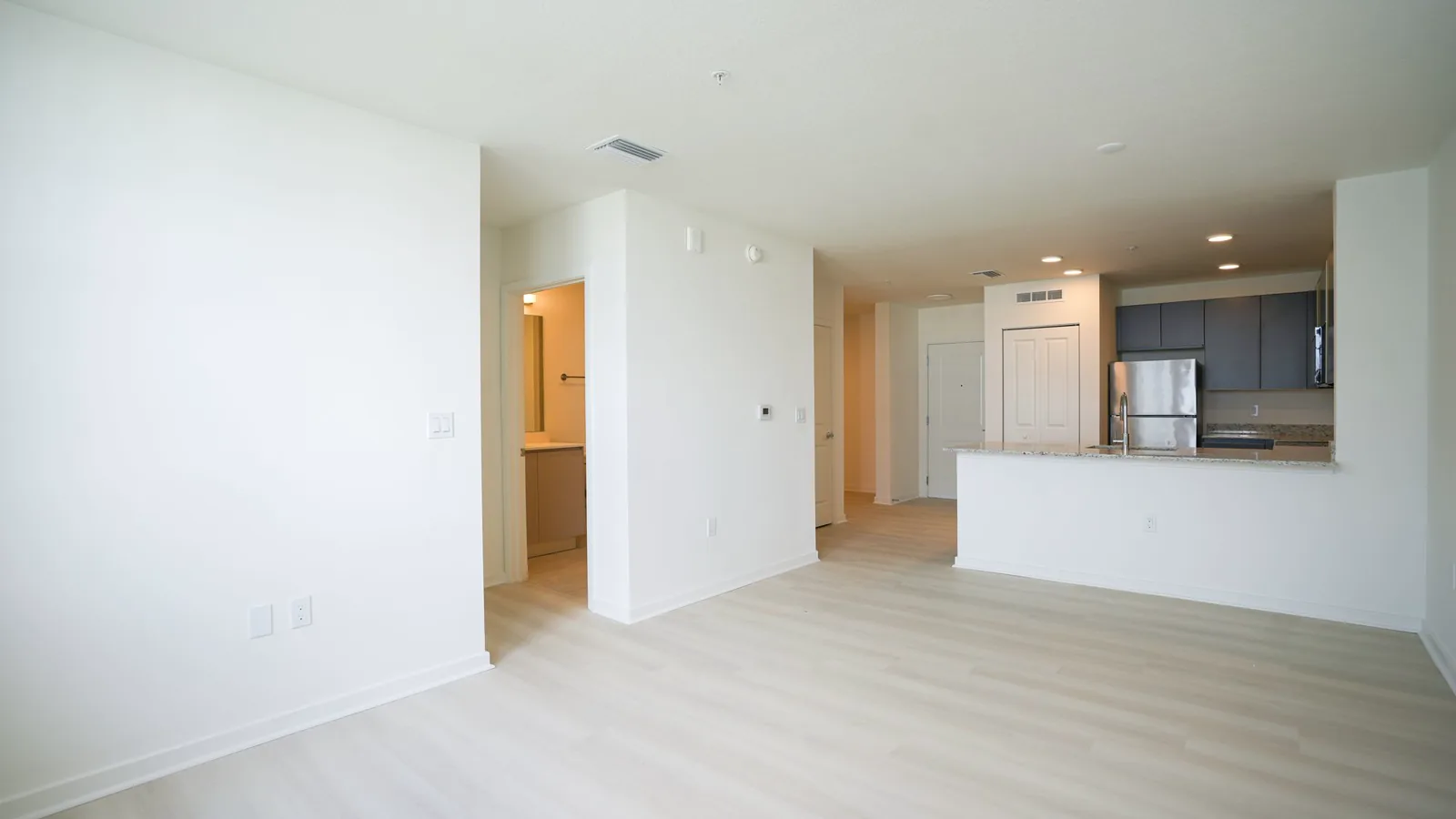
The best flooring for most Toronto condos is rigid-core luxury vinyl plank or engineered hardwood, laid over an acoustic underlay your condo board has approved. Laminate suits a tighter budget and a dry room. Solid hardwood is a poor fit for a condo slab, because it needs a wood subfloor to nail into.
Your building narrows the choice before your taste does. The concrete slab, the board’s sound rule, the height at your suite door and the elevator booking all rule options in or out. This guide walks through each material, what condo boards ask for, and how to plan the job so it gets approved the first time.
What makes condo flooring different from a house?
A detached house in Markham or Oakville sits on wood joists with a plywood subfloor. A suite in a North York or Mississauga tower sits on poured concrete, with a neighbour below and a board that writes the rules. Three practical differences follow from that.
You are working on concrete
A concrete slab stays cool, holds moisture longer than wood and shows every dip under a thin plank. Glue-down and floating floors work on it. Nailed floors don’t, since there is nothing to nail into. Before a new floor goes in, the installer checks the slab with a long straightedge, then grinds the high spots and fills the low ones.
Your board sets a sound rule
Most condo buildings limit how much footstep noise can reach the suite below. Boards state the limit as an impact rating (IIC) for the floor and underlay tested as a pair, so the underlay matters as much as the plank on top. We cover the numbers and the approval steps in our guide to condo flooring sound rules.
Door clearances, transitions and the elevator
Entry doors, closet doors and balcony sills leave little room for a thick floor, and the threshold where your new floor meets the corridor carpet needs a clean transition piece. Every delivery goes up in a booked service elevator, inside the hours your property manager allows. Ontario’s Condominium Act, 1998 lets each board make rules about how owners use and change their units, so read yours before you shop.
Which flooring works best on a condo concrete slab?
Three materials cover most Toronto condo floors: rigid-core vinyl plank, engineered hardwood and laminate. Porcelain tile fills the wet rooms. Here is how they compare on the things a condo throws at a floor.
| Material | On a concrete slab | Sound, with the right underlay | Water | Best condo rooms |
|---|---|---|---|---|
| Rigid-core vinyl plank | Floats; forgives small dips once levelled | Good | Waterproof surface | Whole suite, kitchen, entry |
| Engineered hardwood | Glued down or floated | Good | Resists spills you wipe up | Living room, bedrooms |
| Laminate | Floats | Fair to good | Seams dislike standing water | Bedrooms, den |
| Porcelain tile | Set in mortar on the slab | Needs a sound mat | Waterproof | Bathroom, entry |
| Solid hardwood | Needs a wood subfloor to nail into | Depends on the build-up | Poor | Rare in a tower suite |
Rigid-core vinyl plank
Rigid-core vinyl plank, often sold as SPC, pairs a stone-plastic core with a printed wear layer. The planks click together and float over the slab, which makes them tolerant of the small dips you find in most towers once the worst spots are levelled. Wet boots, a leaking dishwasher and a dog’s water bowl won’t harm the surface. For a suite you plan to rent out or sell within a few years, it is the safest pick. Our vinyl flooring crew lays it over an acoustic underlay matched to your building’s rule.
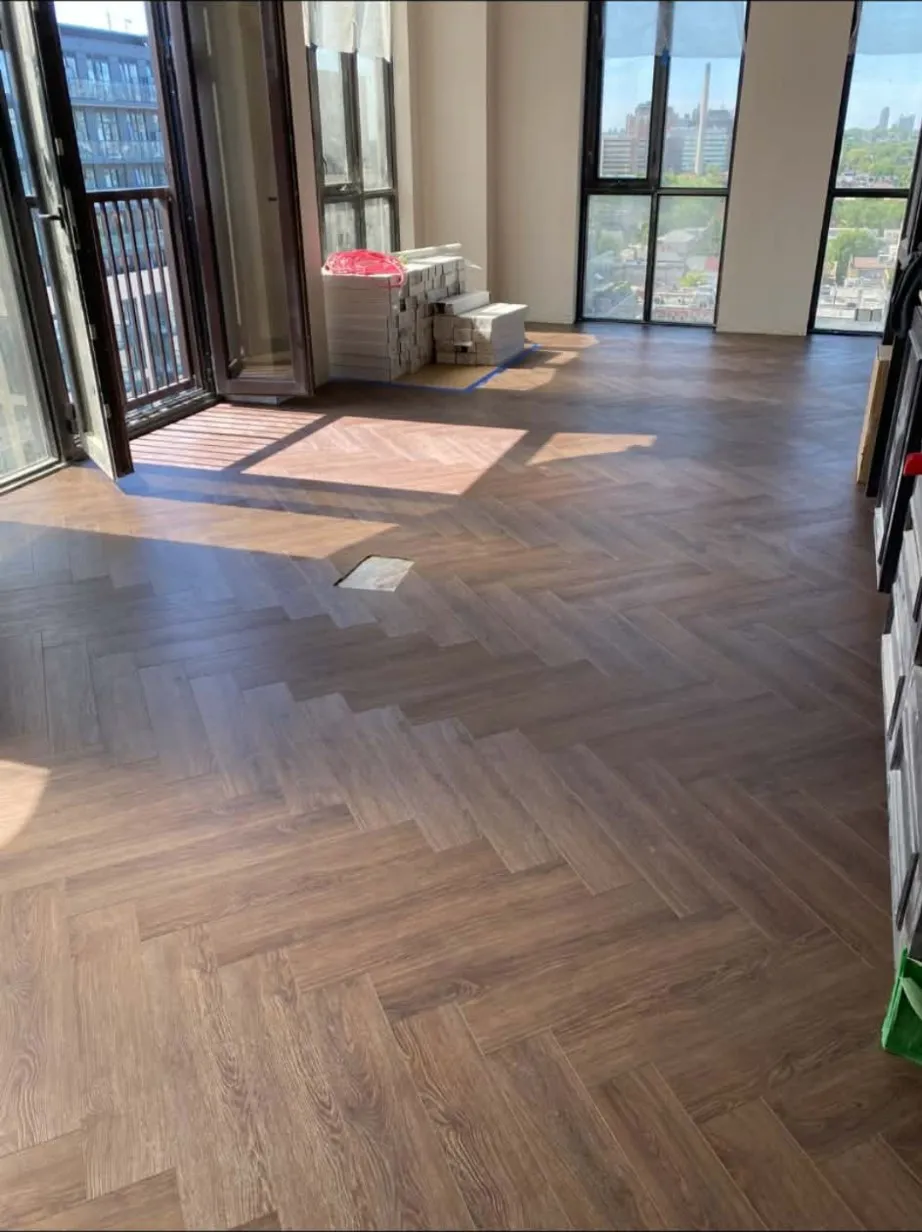
Engineered hardwood
Engineered hardwood bonds a real wood top layer to a stable plywood or fibreboard core. The National Wood Flooring Association notes that engineered boards expand and contract less than solid wood, which is why they cope with a concrete slab and the swing from dry January air to humid August. Installers glue it to the slab or float it over an approved underlay. It looks and ages like wood, and boards with a thick top layer can be sanded again years from now. If real wood matters to you, our hardwood installation team can tell you which boards and methods your building accepts. For a side-by-side, read engineered hardwood vs vinyl plank.
Laminate
Laminate sits at the lower end of the budget range and resists scratches well. Its weak points are water left standing on the seams and a hollow sound underfoot when the underlay is thin. In a bedroom, den or rental suite with careful tenants, it does the job. Our laminate flooring installation page covers the board ratings to look for, and laminate vs vinyl flooring compares the two in more depth.
Tile and solid hardwood
Porcelain tile suits condo bathrooms and some entries, and most boards ask for a sound mat beneath it. Solid hardwood needs plywood to nail into. In a tower suite, that means building up a wood subfloor, which eats the door clearance most suites don’t have and adds another item for the board to approve.
How quiet does a condo floor need to be?
Your board sets the number as a minimum IIC rating for a specific floor and underlay tested together. The underlay does most of the work. For laminate and vinyl, we fit an IIC 72 certified underpad where a building calls for it, and we can pass the test data to your property manager for approval. Noise between suites ranks among the most common condo disputes, as the Condominium Authority of Ontario’s guide to condo noise shows, so boards read flooring applications with care.
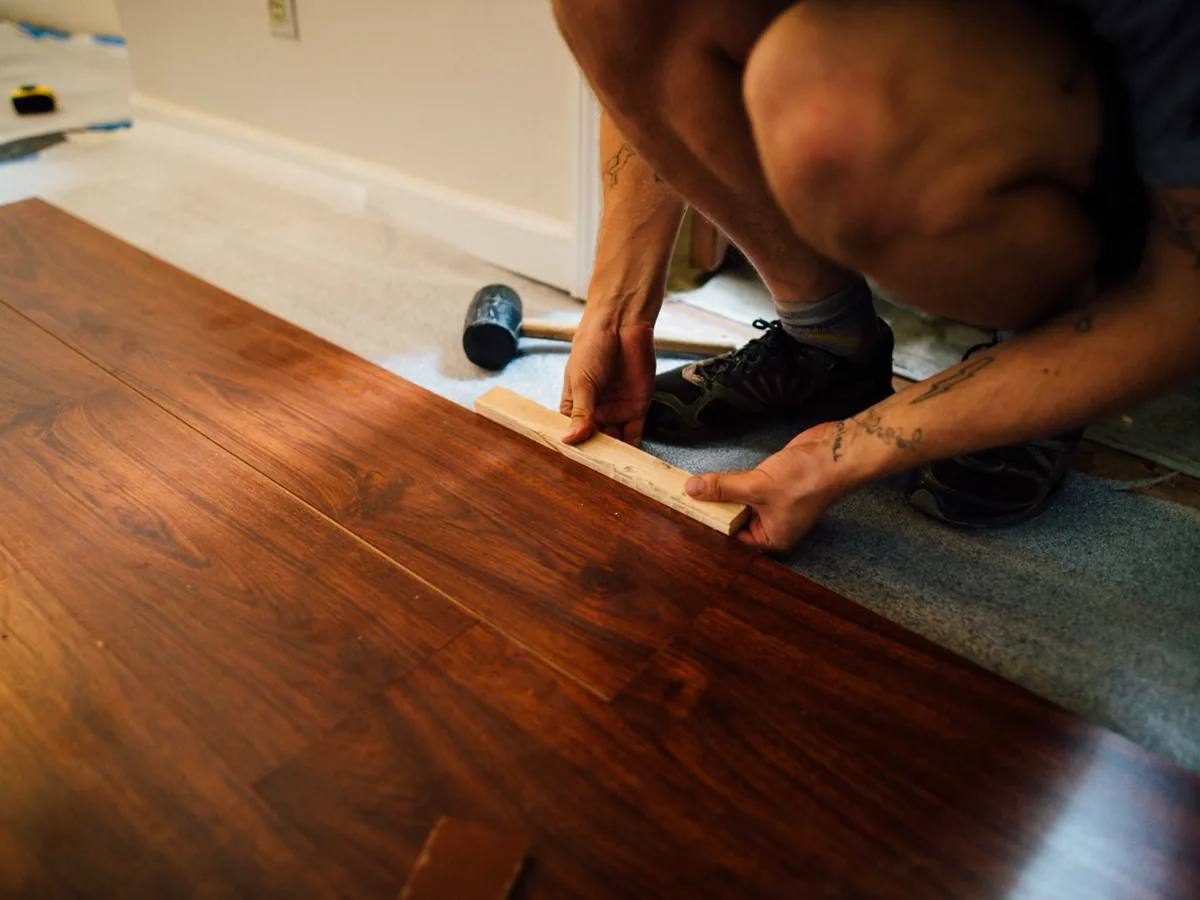
Two habits keep a quiet floor quiet. Leave the expansion gap at the walls free of caulk and tight trim, since a floor that touches the walls carries sound into the structure. And put felt pads on chair and table legs on day one. The full breakdown of IIC, STC and the paperwork lives in our condo sound rating guide.
Which condo flooring helps resale?
Buyers touring a Toronto condo expect a hard surface through the main rooms. Carpet in a living room reads as a project they will have to pay for. One continuous floor from the entry through the living room and bedrooms makes a small suite feel larger, and a mid-tone plank hides dust and scuffs better than pale or near-black boards.
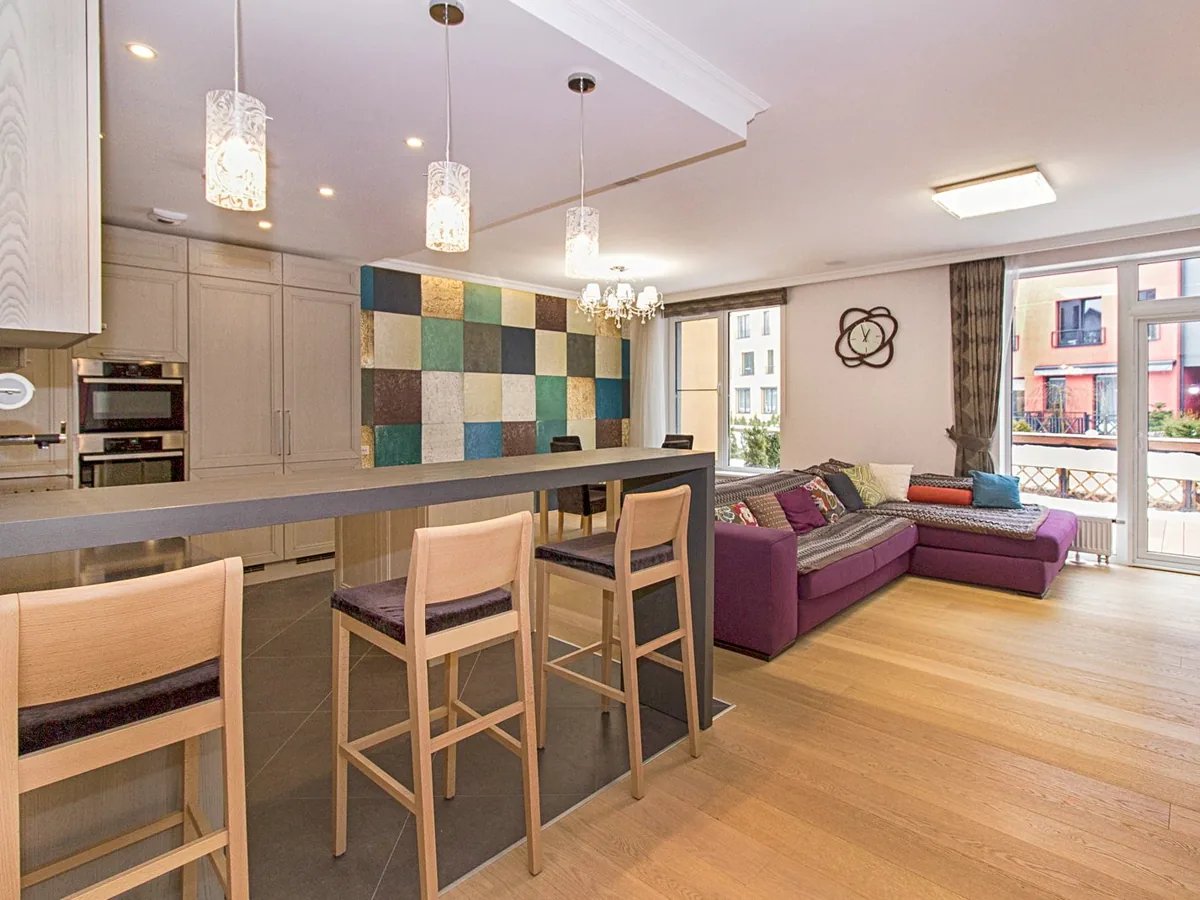
Engineered hardwood earns the “real wood” line in a listing. Good vinyl plank wins on toughness and handles tenants well. Either one beats three different floors in a 700-square-foot suite.
What floor should go in each room of a condo?
- Entry: vinyl plank or porcelain tile. Winter brings salt, slush and wet boots straight from the elevator.
- Kitchen: vinyl plank, or engineered hardwood with a hard finish if you wipe spills fast. Our kitchen flooring guide goes deeper.
- Living room and bedrooms: engineered hardwood or vinyl plank, run as one floor with no thresholds between rooms.
- Bathroom: porcelain tile over the sound mat your board specifies, or vinyl plank in a powder room.
- Den or office: laminate works if the room stays dry.
Living with a dog or cat changes the ranking. See the best flooring for dogs and pets before you choose a soft wood species or a high-gloss finish.
How do you plan a condo flooring install?
A condo floor job runs on paperwork as much as tools. These steps keep it moving:
- Read your declaration and rules. Find the required sound rating, any approved underlay list and the permitted work hours.
- Ask your property manager what they need. Most want an application form, product data sheets and the underlay test report.
- Bring samples home. Check them against your window light and your kitchen cabinets, at different times of day.
- Book a measure. We measure each room, check the slab and the door clearances, and put the full scope in a written quote.
- Book the elevator and the dates. Your manager assigns the service elevator; deliveries and debris move inside those slots.
- Let the material settle. Wood and some vinyl products need time in the suite before installation. The crew levels the slab and lays the underlay.
- Install and trim. The planks go down, then baseboard or quarter-round and the transition at your entry door.
Our own installers do the work, with no subcontractors, and every job carries our 2-year warranty. Most rooms are typically completed in one to three days, depending on size and subfloor. For a fuller timeline, see how long flooring installation takes. We work in towers across the city, including condo flooring in North York along Yonge and Mississauga condos around City Centre.
Condo flooring questions
Can you put hardwood flooring in a condo?
Yes, as engineered hardwood glued to the slab or floated over an underlay your board approves. Solid hardwood needs a wood subfloor to nail into, which most condo suites can’t fit under their doors.
Is vinyl plank flooring good for condos?
Rigid-core vinyl plank is one of the best fits for a condo. It floats over concrete, shrugs off water and meets most sound rules when it sits on the right acoustic underlay.
What underlay do Toronto condos require?
It depends on your building. Most boards set a minimum impact rating (IIC) and some keep a list of approved products. For laminate and vinyl we fit an IIC 72 certified underpad where a building needs it.
Do I need board approval to change my condo flooring?
In most buildings, yes. Ask your property manager for the application form and get written approval before any work starts or any material arrives.
Does laminate flooring work in a condo?
Laminate works in dry rooms such as bedrooms and dens, over a good acoustic underlay. Keep it out of bathrooms and away from entries where wet boots sit.
What affects the cost of condo flooring?
The material, the slab prep, the underlay your board requires, the size of the suite and the transitions at each doorway. Our guide to what shapes a flooring quote explains each one, and the measure and written quote are free.