

Refinish or Replace Hardwood Floors? A 7-Point Floor Check
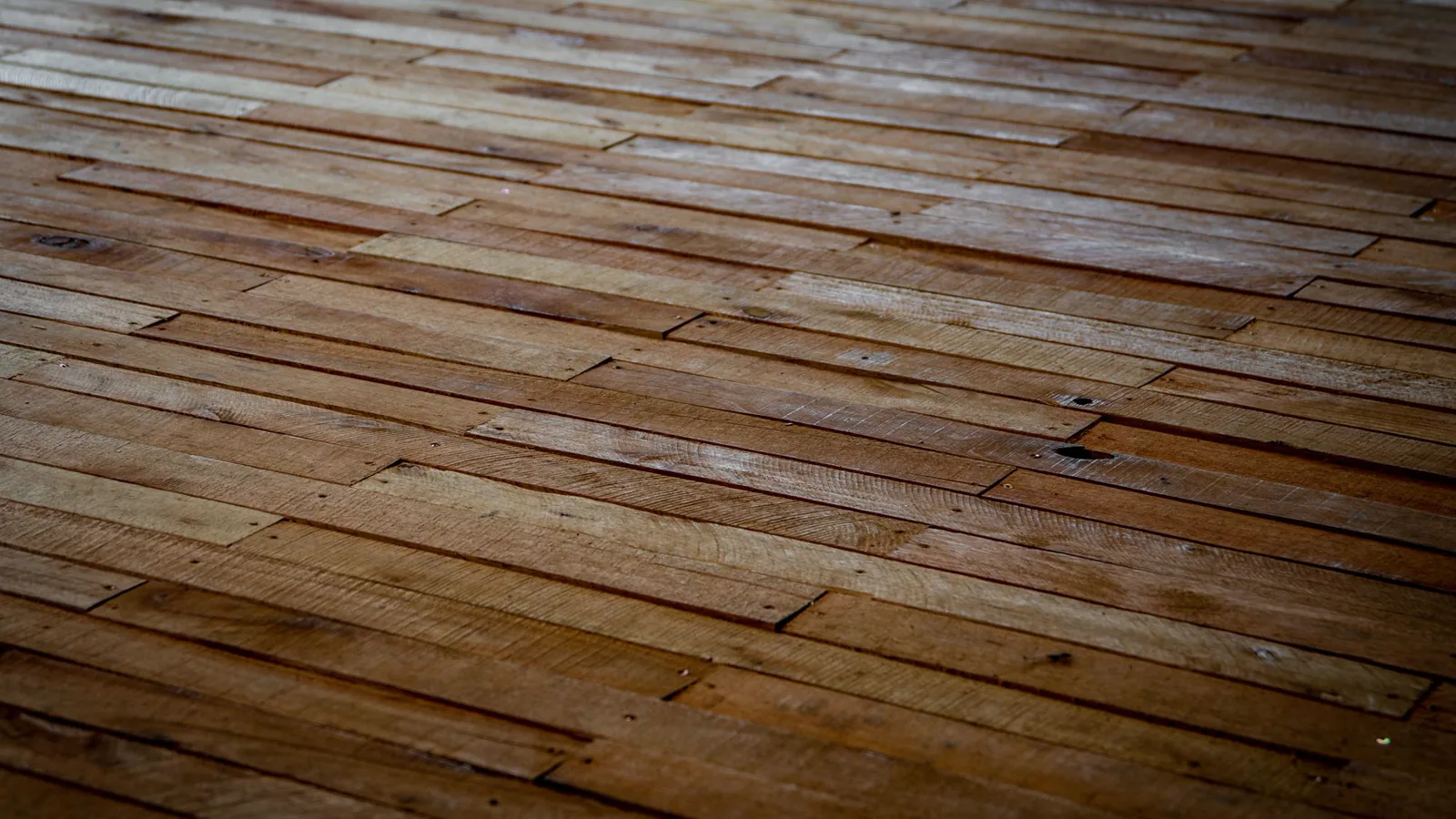
Whether to refinish or replace hardwood floors depends on how much sound wood is left. If the boards lie flat, sit tight and still have enough wood above the tongue to sand, refinish them and keep the floor you have. Replace them when earlier sandings have used up the wood, when water has cupped or rotted the boards, or when pet stains run deep through large areas.
Plenty of GTA homes, from post-war bungalows to 1980s two-storeys, have oak floors in better shape than their owners think. Others have been sanded so many times that the nail heads show. The seven checks below take about half an hour with a flashlight, a ruler and a screwdriver. They will tell you which group your floor falls into before you book anyone to look at it.
Should you refinish or replace your hardwood floors?
Start from the assumption that you will refinish. Sanding keeps every board you already own, avoids tear-out and disposal, and leaves no new trim heights to sort out at doorways and stairs. Replacement makes sense when the wood itself has failed, which is less common than the worn surface suggests. Scratches, grey traffic lanes, an orange 1990s stain and dull patches all live in the top layer of finish and wood, and a full sand removes them.
The questions that matter sit deeper: how thick the remaining wood is, whether the boards are flat, and whether damage has gone through the board. The checklist below works through each one.
How do you tell if hardwood floors can be refinished?
Work through these seven checks in order. The first two decide most cases.
Check 1: How much wood is left above the tongue?
Every full sanding takes a thin slice off the top of each board. The limit is the tongue, the strip that locks one board into the next. Once sanding reaches it, the boards split at the edges and nails start to show. To see what you have, lift a floor register in the room, shine a flashlight into the opening and look at the cut end of a board. You will see the top surface, the groove and the tongue. Measure from the surface down to the top of the tongue.
A generous layer of wood above the tongue means several more sandings are possible. A sliver of a couple of millimetres, nail heads visible on the surface, or tongues peeking through between boards mean the floor has had its last full sand. The NWFA notes that the number of times a floor can be sanded depends on the thickness of the wear layer and the flatness of the floor, along with the skill of the person running the sander.
Check 2: Are the boards cupped or crowned?
Lay a straightedge or a long level across the width of several boards. Cupped boards have edges higher than their centres, and they come from moisture under the floor: a damp crawl space, a leak, a basement with no vapour barrier. Crowned boards are the reverse, with raised centres, often because someone sanded a cupped floor flat before it had dried out. The National Wood Flooring Association explains how moisture gain causes cupping and moisture loss causes gaps.
Mild cupping that settles once the moisture source is fixed can be sanded flat afterwards. Severe cupping, or boards that have lifted off the subfloor, point toward replacement in that area.
Check 3: How deep do the stains go?
Grey, light-coloured marks tend to sit in the finish and sand out. Dark grey or black stains are a different story. They come from water or pet urine soaking into the wood, where the moisture reacts with the tannins in oak and turns it black. A test is to press a fingernail into the stained area: soft wood means rot. Black stains seldom sand out, because they run through the board. A few stained boards can be cut out and replaced with matching wood before the sand. A whole hallway of them may tip the decision.
Check 4: How wide are the gaps, and do they close in summer?
Hairline gaps that open in January and close by July are normal in a GTA home, where furnace heat dries the air for months. They don’t affect a refinish. Wide gaps that stay open all year, or a single large gap where boards have shifted, need attention. Filler can close small gaps before the finish goes on, but it cracks out of wide ones. Those boards may need to be pulled together or replaced.
Check 5: Are boards loose, squeaky or soft underfoot?
Walk the room at a slow pace and listen. Squeaks and a little movement come from boards that have pulled away from their nails, and an installer can fasten them from above before sanding. A spongy feel or a dip you can see is a subfloor problem: a cracked joist, rotted plywood near an old leak, or a patch from a renovation. That needs fixing from below or by lifting boards, and it may change the plan for the whole room.
Check 6: Is it solid or engineered hardwood?
The vent-cover view from Check 1 answers this as well. A solid board is one piece of wood from top to bottom. An engineered board shows layers, a wood veneer on top of plywood or fibreboard. Engineered floors with a thick top layer can be sanded, sometimes more than once. A thin veneer may take one light sand or none, and sanding through it exposes the plywood below, which cannot be hidden. If you are weighing a new engineered floor against other materials, our comparison of engineered wood and vinyl plank explains how veneer thickness affects the lifespan.
Check 7: What finish is on it now, and what colour do you want?
A full sand removes any finish, including old wax, so the existing coating matters only if you hope to skip sanding. Colour matters more. Sanding back to bare wood lets you move from a dated orange or red tone to a natural, brown or darker stain. Red oak keeps a pink undertone under grey stains, and maple and birch can blotch under dark colours, so test a sample patch first. Prefinished boards with bevelled edges also need a deeper sand to flatten those bevels, which uses up more of the wood you measured in Check 1.
How do you read your results?
Add up what you found. Most floors fall into one of three groups.
| What you found | Likely verdict |
|---|---|
| Enough wood above the tongue, flat boards, surface wear only | Refinish |
| Good wood overall, with a few black stains, loose boards or wide gaps | Repair those areas, then refinish |
| Thin wood, visible nails or tongues, or a thin engineered veneer | Replace |
| Severe cupping, rot or a soft subfloor | Fix the cause, then replace the damaged area or the floor |
When is refinishing the better choice?
Refinishing wins whenever the wood passes the first two checks. It suits floors that look tired more than damaged: traffic lanes down a hallway, scratches from a dog, sun fade by the patio door, or a colour you have never liked. It also lets you keep original features that are hard to match today, such as narrow oak strip in a 1950s bungalow or a border around a dining room.
- Lower disruption: no demolition, no new thresholds and no change to the height at doorways and stairs.
- Colour freedom: bare wood takes a new stain and a sheen from matte to gloss.
- Matching: stairs and landings can be sanded and stained to match the floor.
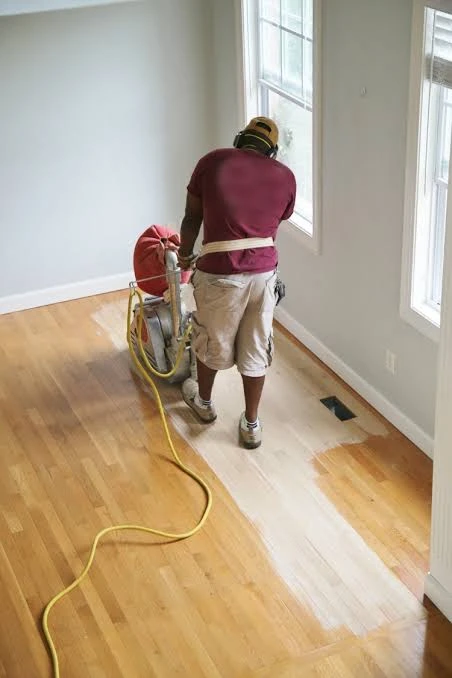
Before you book, compare scope as well as price. Our guide on vetting a flooring contractor in the GTA lists the questions to ask about board repairs, dust and finish coats. When the sanding starts, we use dust-contained sanding equipment, and our own installers do the work, with no subcontractors. If refinishing fits, our sanding and refinishing service page explains the stain and sheen choices.
When is replacing the better call?
Replace the floor when sanding cannot give you a sound surface, or when you want something refinishing cannot deliver. That covers floors that have run out of wood, engineered veneers that are too thin, widespread water or pet damage, and boards that keep cupping because of a damp subfloor. It also covers a change of format, such as wider planks, a herringbone pattern or a switch to a waterproof floor in a basement or kitchen.
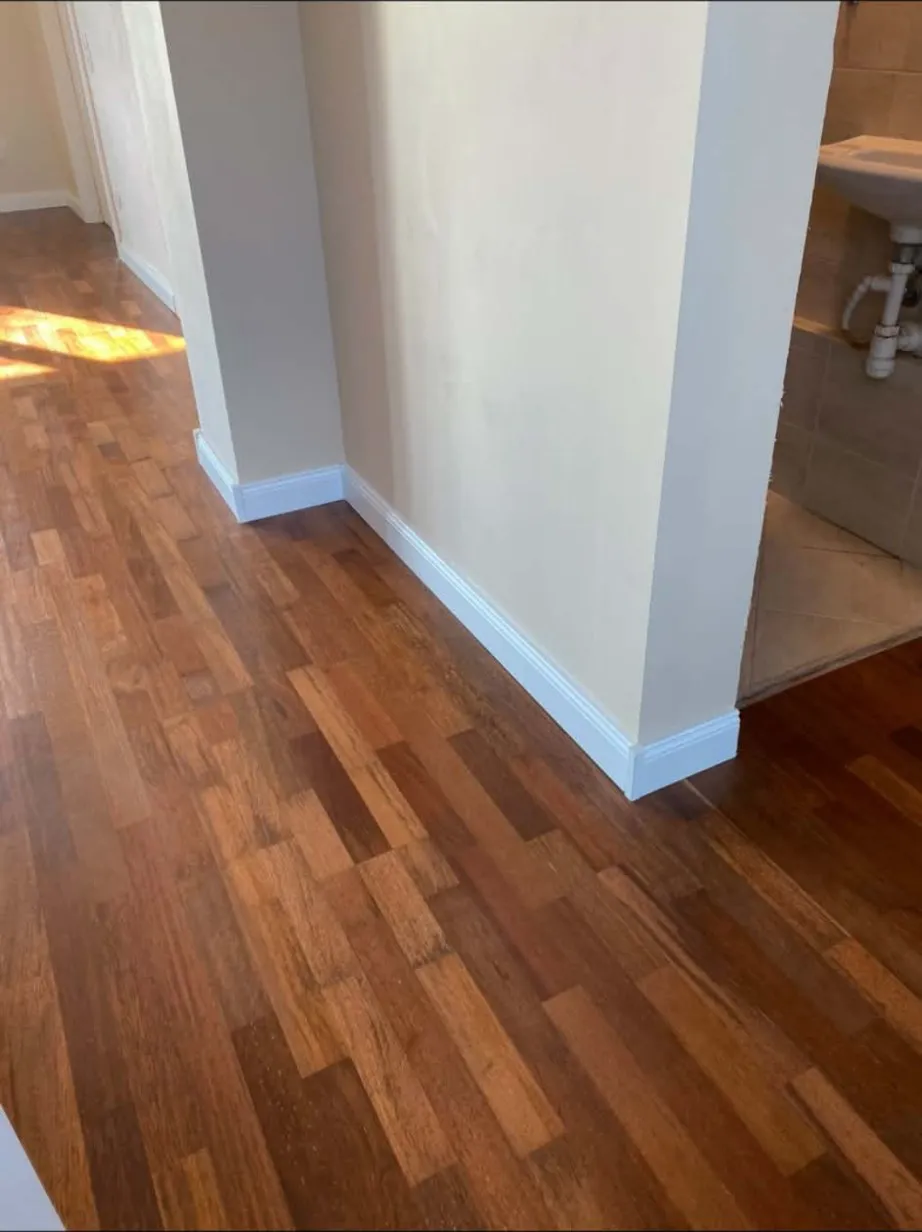
A new floor gives you a fresh wear layer, a modern board width and the chance to fix the subfloor while it is open. Our solid and engineered hardwood replacement work covers tear-out, subfloor repairs and the new boards. Most rooms are typically completed in one to three days, depending on size and subfloor. If the stairs are carpeted and the floor is coming out, it is a good time to plan swapping stair carpet for hardwood so the two match.
Is a screen and recoat enough?
Sometimes. A screen and recoat, also called a maintenance coat, scuffs the existing finish and adds a fresh coat on top without sanding into the wood. The NWFA describes it as the fix for floors that have turned dull while the finish is still intact. It works for light surface scratches and a worn sheen. It cannot remove deep scratches, dents, grey areas where the finish has worn through, or stains, and it cannot change the colour. It also needs a compatible finish underneath: wax and some factory finishes will not bond with a new coat without a full sand. If your floor fails any of those tests, a full sand and refinish is the step up.
What if your hardwood is hiding under carpet?
Many 1950s and 1960s bungalows across North York and Scarborough were built with oak strip floors that later owners covered with wall-to-wall carpet. That oak is often in good shape, since the carpet protected it from wear. Lift a corner of the carpet inside a closet and look for tack-strip nail holes along the walls, staples from the pad, paint drips and the odd pet stain. All of those are normal and most sand out or can be patched. Run the seven checks once the carpet is up. Owners of North York bungalows with original oak often find the wood has decades of life left.
Refinishing and replacement questions
How many times can you refinish a hardwood floor?
It depends on the wood left above the tongue and how much each previous sand removed. Solid hardwood can often handle several full sandings over its life. Engineered floors allow fewer, and a thin veneer may allow none.
Can you refinish only one room of hardwood?
Yes, but the new finish and colour will look different from the rooms next to it. Most homeowners refinish every connected room at once, stopping at a doorway or threshold.
Is it worth refinishing hardwood floors before selling?
A floor sanded and refinished in a neutral colour photographs well and removes an item from a buyer’s to-do list. It costs less than replacing the floor and keeps the “hardwood throughout” line in your listing.
Can water-damaged hardwood be refinished?
If the boards have dried flat and the stains are light, yes. Black stains, soft wood or boards that stay cupped need cutting out and replacing first, and the source of the water must be fixed.
What affects the cost of refinishing compared with replacing?
Room size, board repairs, stain colour, the number of finish coats and any stairs drive a refinish. Replacement adds tear-out, disposal, subfloor work and new material. Our page on how flooring jobs are priced explains each factor, and the visit and written quote are free.