
Best Flooring for Dogs and Pets: Claws, Accidents and Grip
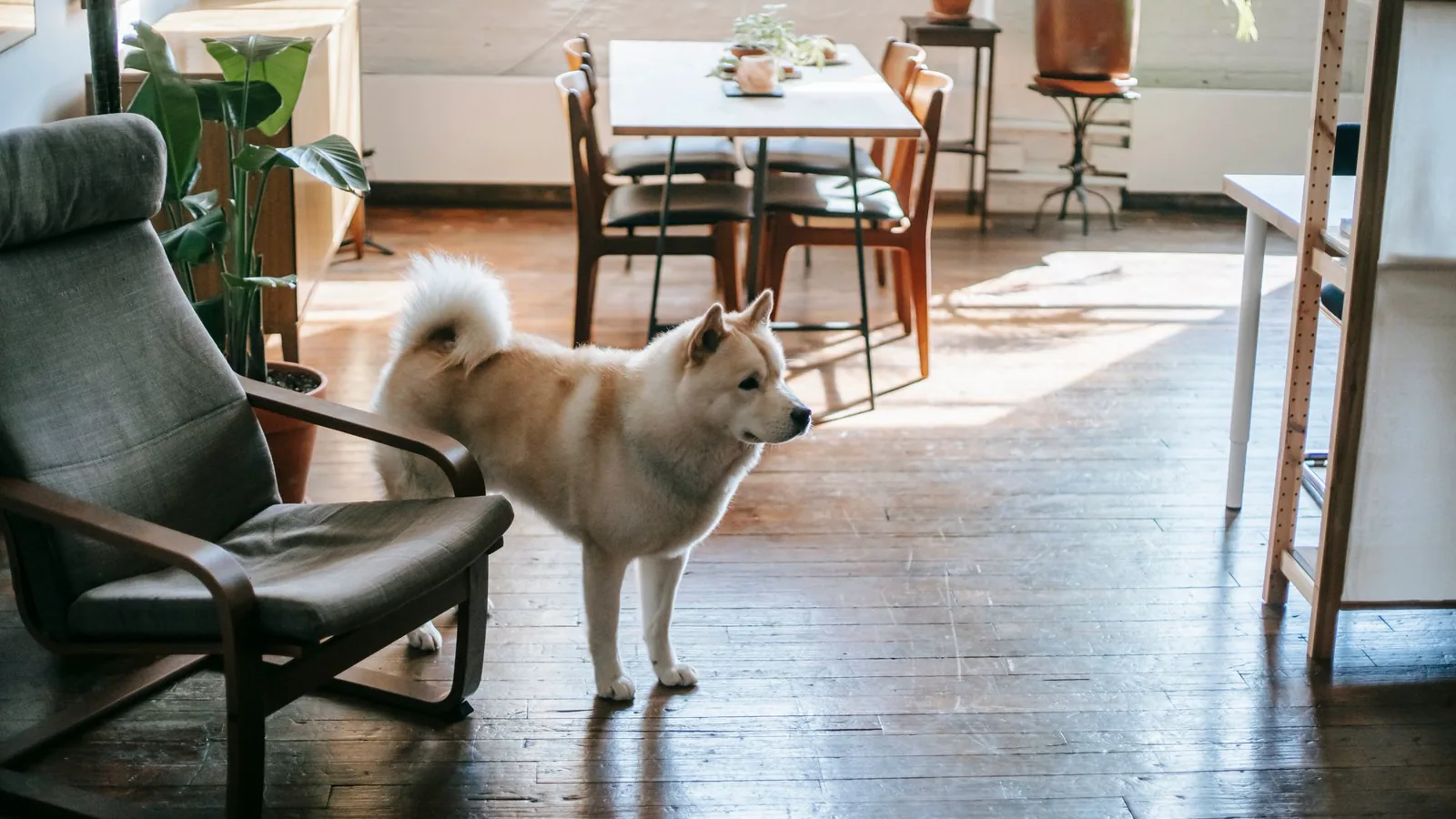
The best flooring for dogs is rigid-core luxury vinyl plank with a thick wear layer and a matte, textured finish. It handles accidents and spilled water bowls, hides light scratches and gives paws more grip than a glossy floor. Laminate with a high abrasion rating comes next for scratch resistance, and porcelain tile is the toughest surface of all, though it is hard and cold to lie on.
Every floor scratches to some degree once a dog lives on it. The goal is a floor that hides daily wear, survives the odd accident and keeps a senior dog on its feet. This guide ranks the main materials for pet homes, explains the ratings worth reading on a sample box, and covers the finishes, rugs and habits that keep a floor looking good for years.
What do dogs do to a floor?
A dog tests a floor in four ways. Knowing which one matters most in your house tells you which material to shortlist.
Claws and grit
Claws leave fine scratches in the surface finish, and a large dog that skids round a corner can gouge softer wood. Grit makes it worse. Winter walks in the GTA bring sand and road salt back through the door on four paws, and those grains act like sandpaper under every step.
Accidents, water bowls and wet paws
Puppies in training, older dogs and cats with a sensitive stomach all have accidents. Urine left on a floor seeps into seams, stains wood and can leave an odour in the core or the subfloor. Add a water bowl that gets tipped every morning and snowmelt dripping off a coat, and water resistance moves near the top of the list.
Grip
Smooth, glossy floors are slippery for dogs. Young dogs skid into walls, and older dogs with stiff hips can struggle to stand up. A floor with some texture, or rugs in the right places, helps them move with confidence.
Noise
Claws click on hard floors. In a house that is a small thing. In a condo or a stacked townhouse, the neighbour below hears it, so the underlay matters as much as the surface.
Which flooring is best for dogs?
Here is how the common floors rank on the four things a dog does to them. No floor wins every row, so weigh the rows that matter in your home.
| Material | Claw scratches | Accidents and water | Grip | Comfort and noise |
|---|---|---|---|---|
| Rigid-core vinyl plank | Good with a thick wear layer | Waterproof surface | Good with a textured finish | Warm, quiet on a good underlay |
| Laminate | Strong at a high AC rating | Fair; seams dislike standing liquid | Fair; some lines are slick | Can sound hollow |
| Porcelain tile | Excellent | Waterproof | Depends on the surface | Hard and cold |
| Engineered hardwood | Fair; shows marks, can be refinished | Fair if wiped up fast | Good with a matte finish | Warm |
| Solid hardwood | Fair; harder species help | Fair if wiped up fast | Good with a matte finish | Warm |
| Carpet | No scratches; snags and pulls | Poor; holds odour | Best of the group | Soft, quiet |
Rigid-core vinyl plank
Rigid-core vinyl plank pairs a waterproof stone-plastic or wood-plastic core with a clear wear layer on top. That wear layer takes the claw marks, so a thicker one lasts longer. Makers list it in mils; for a home with a large dog, ask for one of the thicker options in the range you like. An embossed grain that follows the printed pattern hides fine scratches and adds grip. Spills and accidents stay on the surface if you wipe them up, and a damaged plank can be swapped out. Our rigid-core vinyl installation includes an underlay chosen for both comfort and sound.
Laminate
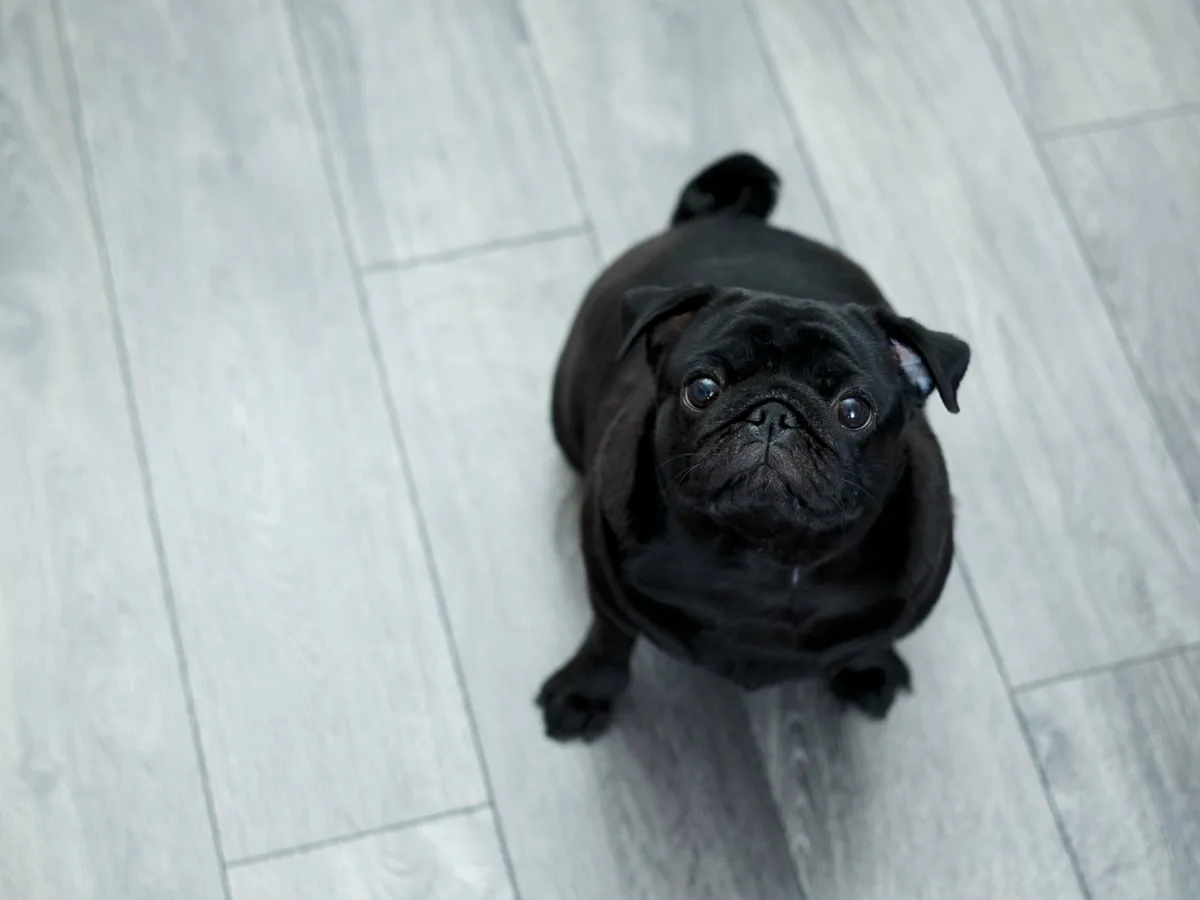
Laminate has the hardest surface of the plank floors. Its abrasion class, or AC rating, tells you how much wear it can take: AC3 suits most homes, and AC4 or AC5 suits a busy house with large dogs. The weak point is liquid. An accident left on a seam overnight can swell the fibreboard core, so pick a water-resistant line with sealed edges and wipe up messes fast. Some laminates have a slick, glossy finish that dogs slide on; choose a textured or matte one. Talk to us about high-AC laminate flooring for pet homes, and see our laminate versus vinyl breakdown for the full comparison.
Porcelain tile
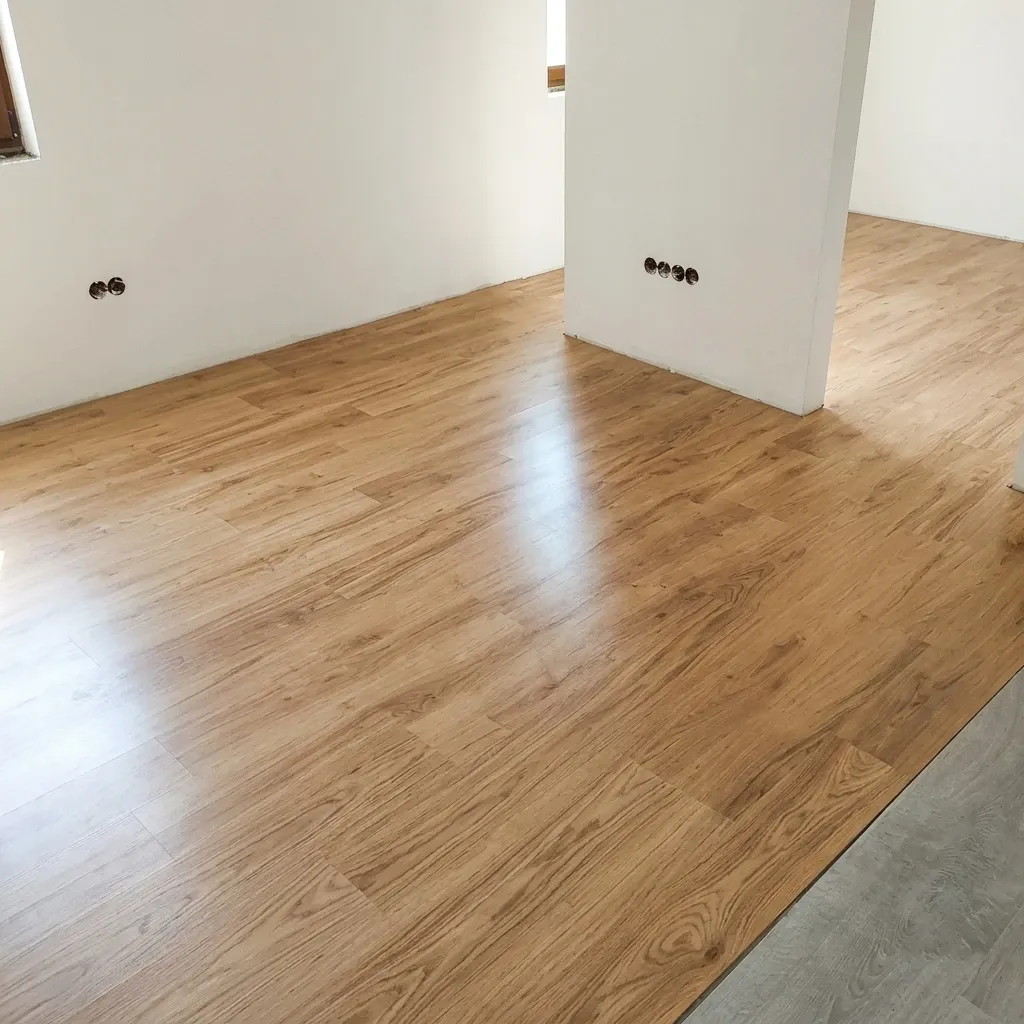
Claws can’t scratch porcelain and accidents can’t soak into it, which makes it a strong choice for a mudroom, entry or the kitchen corner where the bowls sit. It is hard on old joints and cold underfoot, and polished tile gets slippery when wet. A matte or textured tile, plus a dog bed or rug in the spots your pet likes to lie, solves most of that.
Hardwood
Wood will show marks from a dog. Some owners like the lived-in look; others notice every scratch. Species matters: the National Wood Flooring Association’s guide to wood floor durability explains that oak, maple and hickory are harder than walnut, cherry or birch on the Janka scale, though those ratings apply to solid wood. A wire-brushed or hand-scraped texture and a matte finish hide wear well, and a solid floor or an engineered board with a thick top layer can be sanded again later. If real wood matters to you, our hardwood floor crew can suggest a species and finish that suit a dog. For a side-by-side with plank vinyl, read engineered hardwood or vinyl plank.
Carpet
Carpet gives the best grip and the most comfort, but it holds hair, odour and stains, and claws snag the loops. Most pet owners do better with a hard floor plus washable rugs.
Does the finish and colour of a floor matter with pets?
It matters as much as the material. A high-gloss floor shows every scratch as a bright line when light hits it, and it is the most slippery surface for paws. A matte or low-sheen finish scatters light, so fine scratches fade into the grain.
Colour works the same way. Near-black floors show pale scratches, dust and light dog hair. Pale floors show dark hair, muddy paw prints and grit. A mid-tone floor with visible grain and some colour variation hides the most. If your dog sheds a lot, hold a sample next to a clump of fur; a floor close to your dog’s colour hides the hair between vacuums.
What floor suits an older dog that slips?
Senior dogs and large breeds with joint problems need grip more than anything else. If your dog struggles to get up or splays its legs on the floor, try these steps:
- Choose texture. An embossed vinyl plank or a matte wood finish gives paws more to grip than a smooth, glossy surface.
- Add runners. Rubber-backed runners along the routes your dog walks most, such as the hallway to the back door, give steady footing.
- Keep paws trimmed. Fur growing between the pads and long nails both reduce grip.
- Think about the stairs. Townhouse stairs with smooth wood treads are hard for an older dog. Stair treads with grip, or a runner, help.
Where in the house do pets cause the most wear?
Most of the damage happens in three places. The entry takes salt, slush and grit after every winter walk, so a tile or vinyl floor with a large mat inside the door works best there. The kitchen holds the water bowl and the spot where your dog waits for dinner; our guide to choosing a kitchen floor covers that room in detail. And the living room takes the running starts and skids, so rugs earn their place.
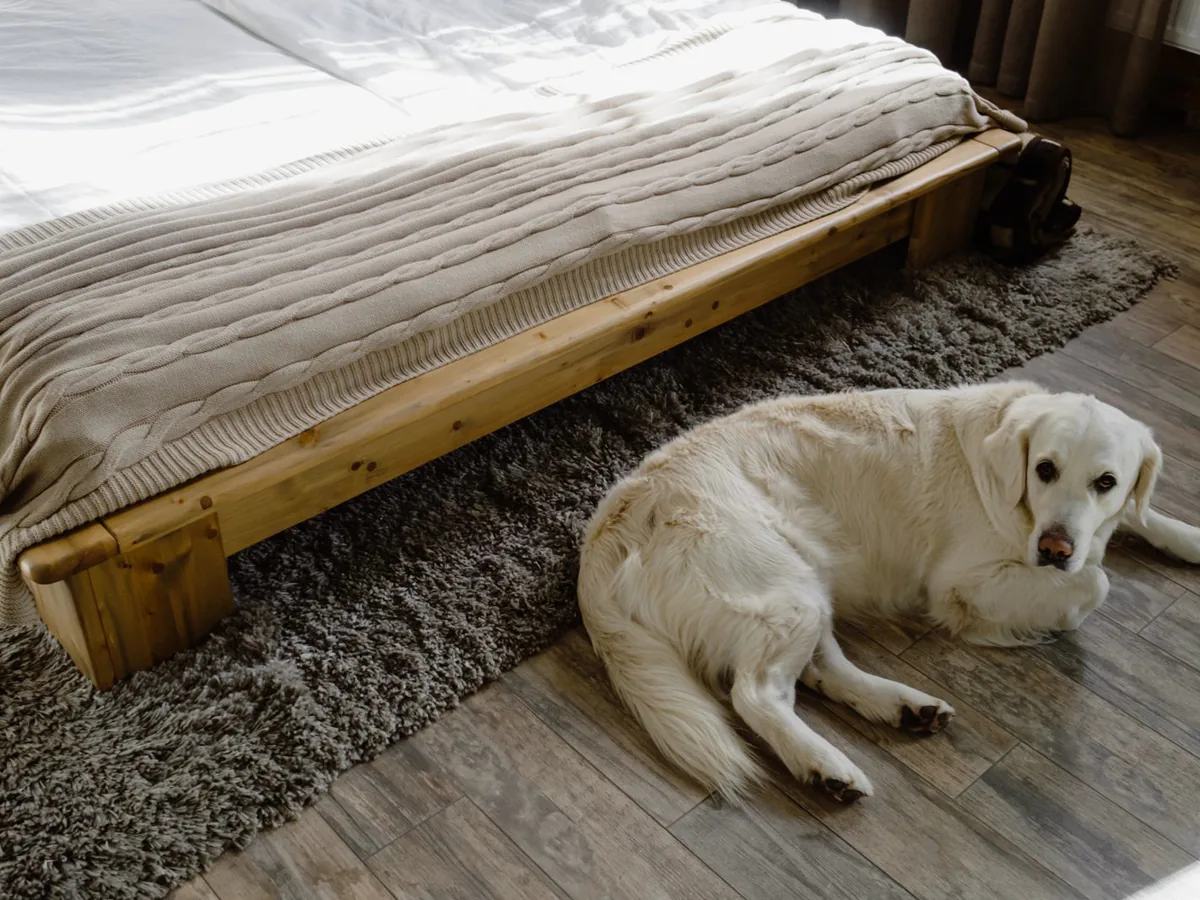
One floor through the main level makes cleaning easier, since a robot vacuum or dust mop can run from room to room without catching on thresholds. Our own installers do every job, with no subcontractors, and each comes with our 2-year warranty. Most rooms are typically completed in one to three days, depending on size and subfloor.
How do you protect a floor from a dog?
A few habits matter more than the floor you pick:
- Trim nails every few weeks. Short nails scratch less and give your dog better grip.
- Wipe paws after winter walks. Keep a towel by the door. Road salt and sand do more damage than claws.
- Put mats at every door. A coarse mat outside and an absorbent one inside catch most of the grit.
- Set the bowls on a tray. A rubber-edged tray under food and water stops daily splashes reaching the floor.
- Clean accidents fast. Blot, then use an enzyme cleaner made for pet urine. Avoid steam mops on vinyl, laminate and wood unless the maker allows them.
- Vacuum or dust mop often. Hair and grit come up best with a hard-floor head that has no beater bar.
Pet flooring questions
Is vinyl or laminate better for dogs?
Rigid-core vinyl plank handles accidents and water better. Laminate with a high AC rating resists scratches better. For most dog owners, the water resistance of vinyl makes it the safer choice.
Do dogs scratch luxury vinyl plank?
They can mark the wear layer, but a thick wear layer with an embossed, matte finish hides most light scratches. Deep gouges tend to come from dragged furniture or trapped grit.
What hardwood is best for dogs?
A hard species such as oak, maple or hickory, with a wire-brushed texture and a matte finish. Engineered boards with a thick top layer can be sanded and refinished later.
Does dog urine damage laminate floors?
It can if it sits on the seams. Urine soaks into the fibreboard core and causes swelling and odour. Wipe accidents up fast and choose a water-resistant laminate with sealed edges.
What affects the cost of a pet-friendly floor?
The material and wear layer, the underlay, removal of old carpet, subfloor repairs and the size of the area. Our page on flooring price factors explains each one, and the measure and written quote are free.