

How Long Does Flooring Installation Take? A Room-by-Room Timeline
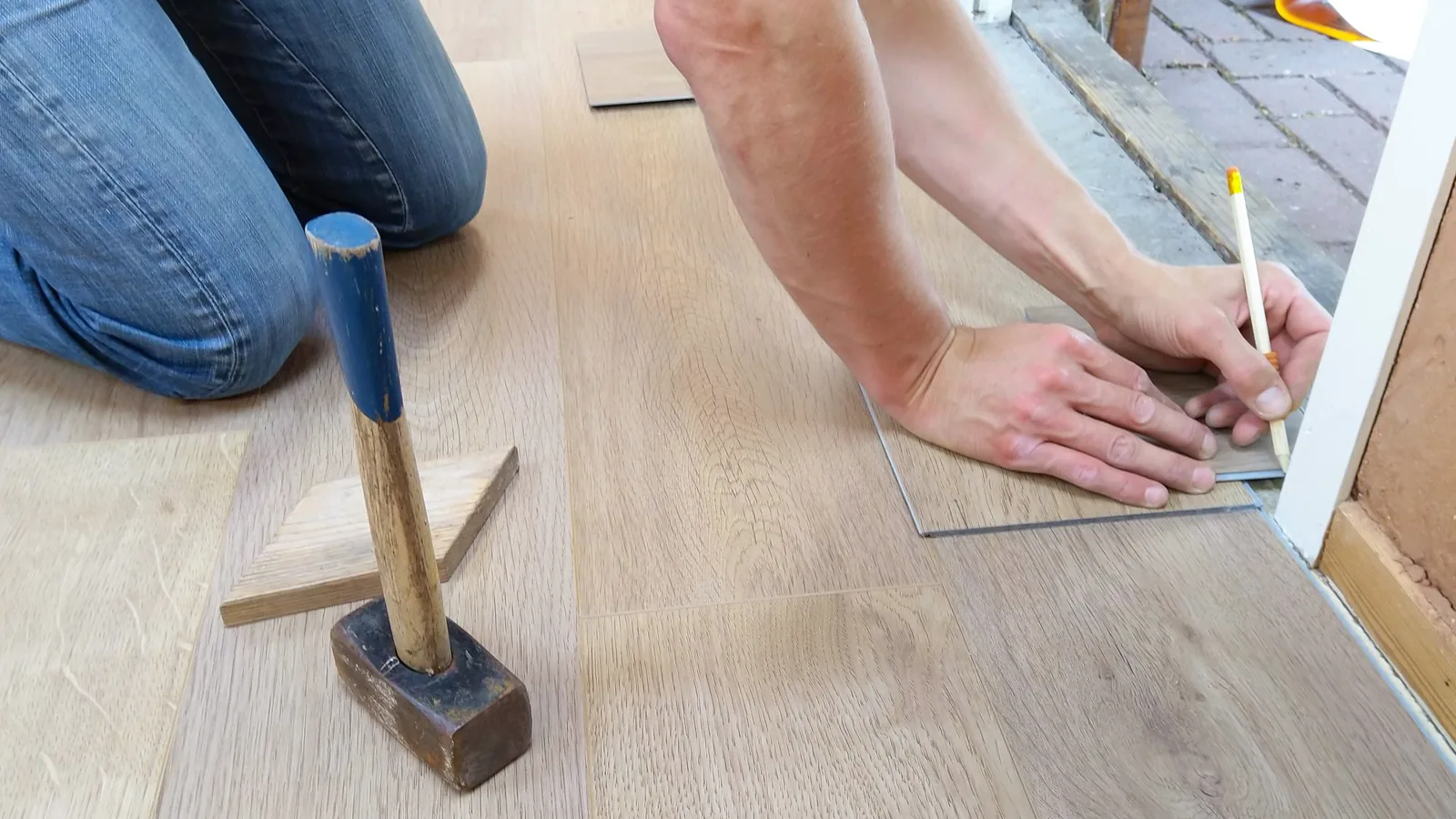
How long does flooring installation take? Most rooms are typically completed in one to three days, depending on size and subfloor. Stairs run on their own clock: plan on three to four days per flight, and the same for a flight with a landing. Removing the old floor, levelling, tile curing and refinishing coats can add time before or after the install itself.
The calendar starts well before the crew arrives. Choosing a floor, ordering it, letting it settle in your home and booking a condo service elevator all take days of their own. This guide walks through each material, the things that stretch a schedule and the steps from your first call to the day you move furniture back.
How long does each type of flooring take to install?
The material sets the pace once the subfloor is ready. Floating floors go down fastest. Glue, mortar and site-applied finish all need time to set, and nobody can rush that part.
| Floor | How it goes down | What stretches the job |
|---|---|---|
| Rigid-core vinyl plank | Clicks together and floats over underlay | Levelling the subfloor; many doorways |
| Laminate | Clicks together and floats over underlay | Levelling; stairs and nosings |
| Engineered hardwood | Nailed, glued or floated | Acclimation; glue set time on concrete |
| Solid hardwood | Nailed to a wood subfloor | Acclimation; sanding and coats if finished on site |
| Porcelain or ceramic tile | Set in mortar, then grouted | Mortar and grout cure; large-format layout |
| Hardwood refinishing | Sanded, stained, then coated | Dry time between coats; cure before furniture |
Vinyl plank and laminate
Click-together planks need no glue and no cure time, so the crew can move from one room to the next as soon as each one is cut in. The slow part is the subfloor: a floating floor shows every dip, so the crew flattens it first. For a full picture of the process, see how a vinyl plank install runs, start to finish.
Engineered and solid hardwood
Nailing engineered or solid boards to plywood moves at a steady pace. Gluing engineered boards to a concrete slab adds set time before anyone walks on the floor. Solid hardwood finished on site adds sanding, stain and several finish coats after the boards are down.
Porcelain and ceramic tile
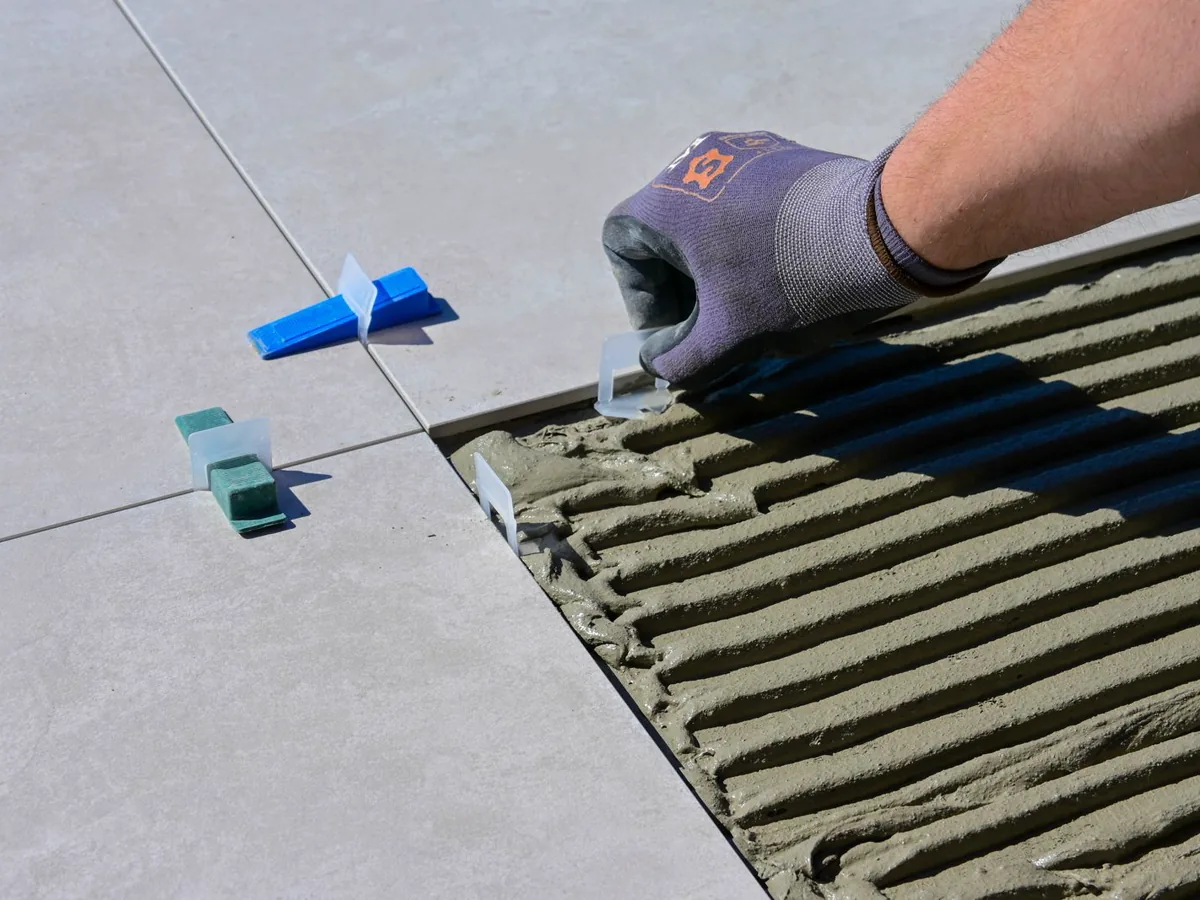
Tile is the slowest of the common floors. Each tile sits in a bed of mortar, often with levelling clips to keep the edges flush, and the mortar needs to set before grout goes in. Grout then needs its own cure before the floor sees heavy use. Large-format porcelain takes extra care at layout so cuts land at the walls instead of the middle of the room. Our page on tile floors for kitchens, baths and entries covers the steps.
Refinishing an existing hardwood floor
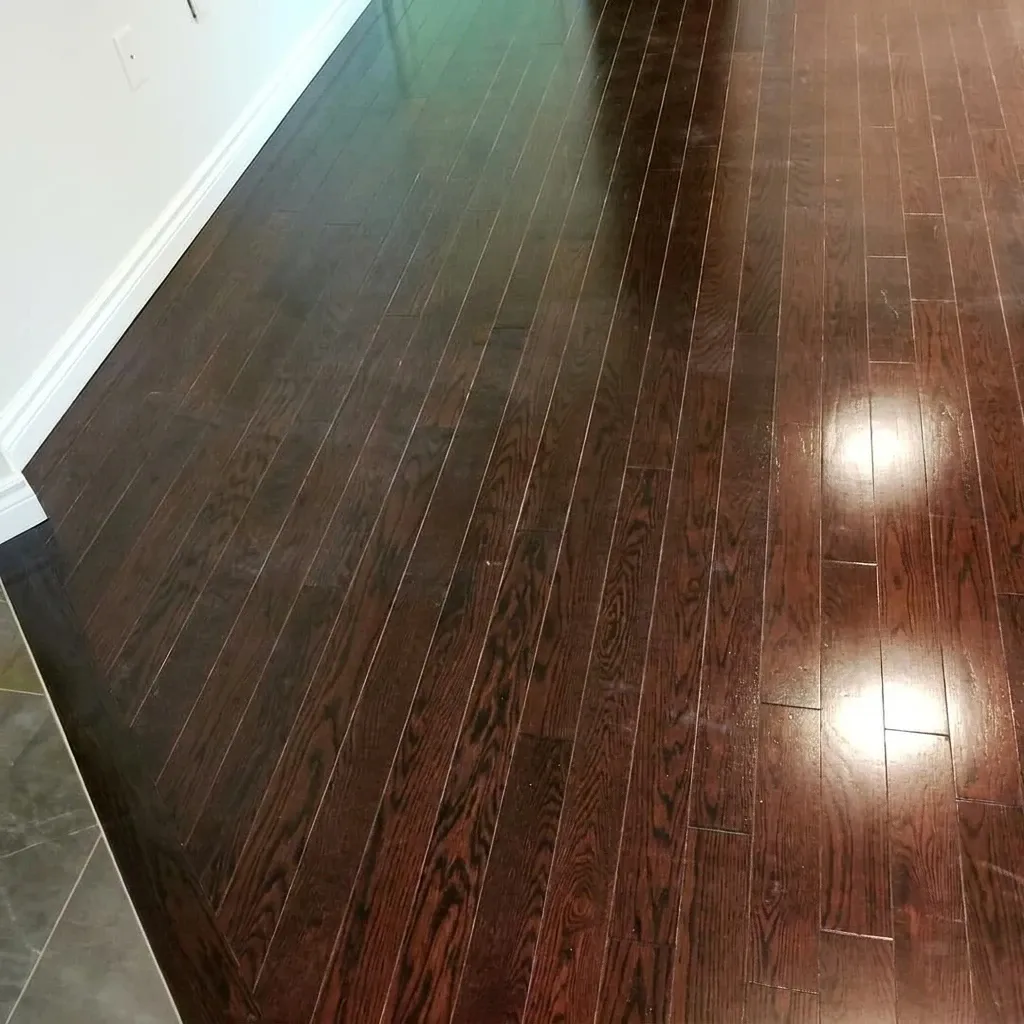
Refinishing runs in stages: sanding, filling, an optional stain and then finish coats. Each coat needs to dry before the next one, and the final coat needs time to cure before rugs and heavy furniture return. Humidity and the type of finish change those dry times. The NWFA explains when a fresh maintenance coat can stand in for a full sand and refinish, which saves days. We sand with dust-contained equipment; our hardwood sanding and refinishing service page explains the process.
What adds time to a flooring installation?
Two homes with the same square footage can take different lengths of time. These are the usual reasons.
Removing the old floor
Carpet and pad come up fast. Ceramic tile set in mortar, glued engineered wood or sheet vinyl glued to a basement slab take far longer, and the adhesive left behind has to come off before the new floor goes down. Older GTA houses often hide two or three layers, such as linoleum under carpet in a post-war bungalow.
Levelling and subfloor repairs
Every floor product has a flatness limit in its installation guide. When a slab or plywood floor falls outside it, the crew grinds high spots and pours levelling compound into low ones, and the compound needs to dry before anything goes on top. On wood subfloors, loose sheets get screwed down and squeaks fixed while the floor is open.
Moisture checks on concrete
Basement and condo slabs hold moisture. Testing comes first, and a high reading changes the plan: a vapour barrier, a different underlay or a different floor. Our basement flooring guide explains which materials handle a slab that stays damp.
Letting the material acclimate
Wood takes on and gives off moisture with the air around it, as the NWFA notes in its advice on moisture and wood floors. In a GTA winter, a furnace dries the air in a matter of weeks, and boards that skip acclimation can gap or cup later. Many manufacturers ask for flooring to sit in the rooms where it will go before installation, so the delivery date matters as much as the install date.
Patterns, stairs and doorways
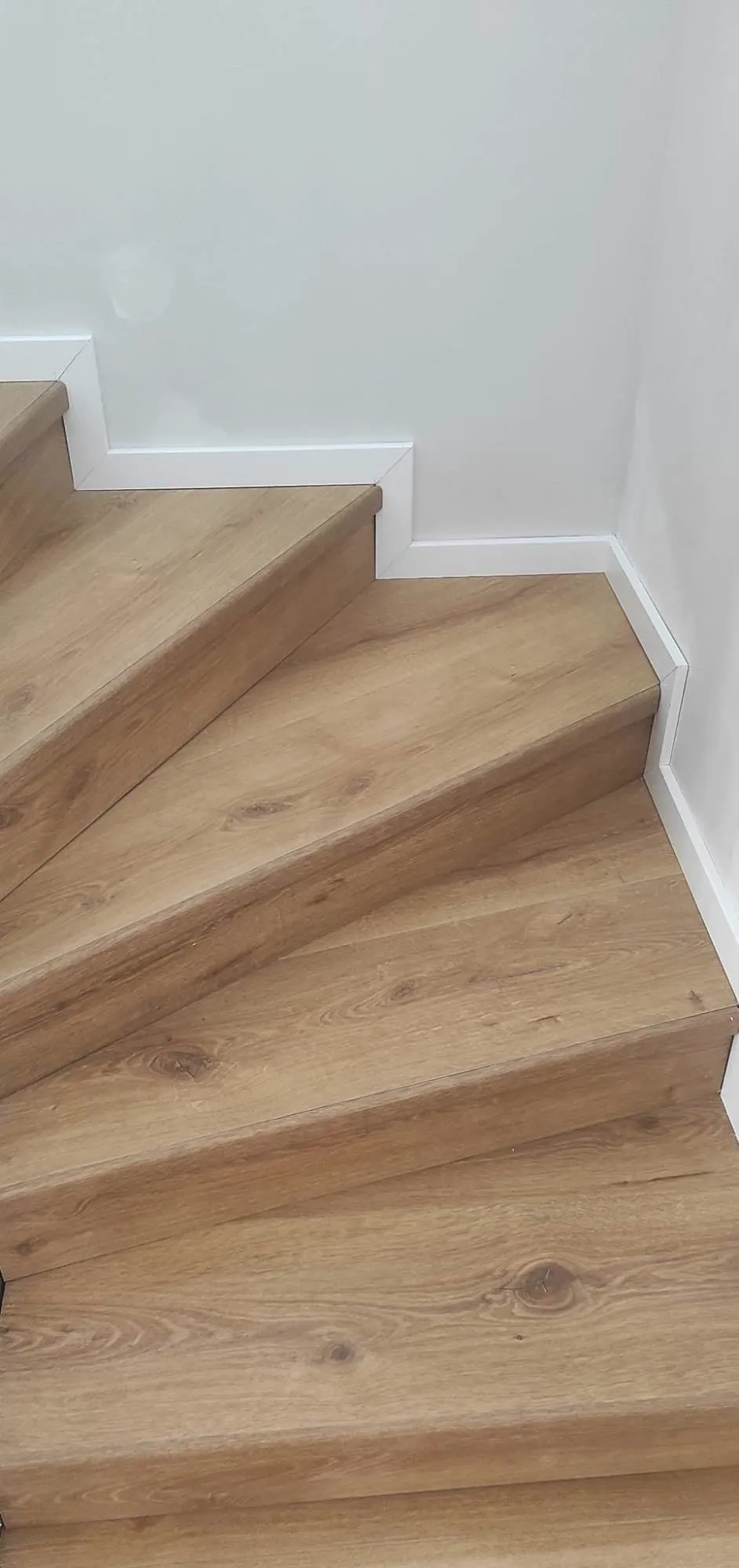
Herringbone and chevron take longer than straight plank, because each piece is placed and cut by hand. Every doorway needs a transition, and every flight of stairs needs treads, risers and nosings cut to fit. Plan on three to four days per flight. Our guide to replacing stair carpet with hardwood breaks down the work, and our stair renovation service page shows finished flights.
Furniture, appliances and condo bookings
Moving a fridge, a piano or a full bedroom set takes time on both ends of the job. In a condo, the service elevator booking and the building’s permitted work hours shape each day. Most boards also want the flooring approved before work starts; our guide to condo sound ratings and approvals covers that step.
What does a flooring project look like from first call to handover?
Every job differs, but most follow this order:
- First contact. Send the rooms and the floor you have in mind through our online quote request. We reply within one business day.
- Free in-home measure. The visit covers each room, the subfloor, moisture on any concrete, the stairs and the door clearances.
- Written quote. The material, prep, removal and trim all appear in writing.
- Material order. Stocked products arrive sooner than special orders. Patterns and wide planks can take longer.
- Delivery and acclimation. The flooring sits in the rooms where it will go, for as long as the manufacturer asks.
- Prep. Removal, levelling and subfloor repairs.
- Installation. Underlay, flooring and cuts, room by room.
- Trim and transitions. Baseboard or quarter-round, reducers at doorways and stair nosings.
- Walkthrough. Walk the finished floor with the crew lead and ask about care and when furniture can return.
Our own installers do the work, with no subcontractors. If you are still comparing companies, our checklist on vetting a flooring contractor covers the questions to ask about schedules and crew size.
How should you prepare your home for flooring installation?
A prepared house saves the crew hours on day one. Before the start date:
- Clear small items, including closet floors, shelves and anything fragile on nearby walls.
- Plan for large items. Agree in advance who moves the fridge, stove, piano and beds.
- Unplug electronics and take down wall-mounted TVs if the baseboards are being replaced.
- Keep the heat and humidity steady. Run the home as you live in it, so the flooring settles to normal conditions.
- Book the elevator and tell your property manager the dates if you live in a condo.
- Arrange pets and children away from the work area, and clear a path for parking and deliveries.
Use the flooring cost estimator while you plan to see how room sizes and material choices change the job.
Can you stay home during flooring installation?
For floating vinyl and laminate, most families stay home. Crews work one area at a time, so finished rooms can go back into use as the job moves along. Saws are loud and cutting makes some dust, so working from home in a far room or a different floor helps.
Refinishing and tile ask more of you. Fresh finish coats need you off the floor until they dry, and some finishes give off a smell for a day or two. A tiled kitchen or bathroom stays out of use until the grout cures. In a larger home, splitting the job into phases keeps a bedroom and a bathroom open throughout.
Timeline questions
How long does it take to install flooring in a whole house?
It depends on the number of rooms, the stairs and the prep. Most rooms are typically completed in one to three days, depending on size and subfloor, and each flight of stairs takes three to four days. The measure is where the schedule for your home becomes clear.
How long should flooring acclimate before installation?
Follow the manufacturer’s instructions for the product you choose. Solid and engineered wood need the most time, since wood takes on or gives off moisture until it matches the room. Some rigid-core vinyl products need less, but the installation guide decides.
How soon can you walk on a new floor?
Floating vinyl and laminate take foot traffic as soon as the crew finishes. Glue-down floors, tile grout and fresh finish coats need time to cure, so follow the product instructions before you put weight or furniture on them.
Does removing old flooring add time?
Yes. Carpet comes up fast, while tile in mortar or glued flooring takes longer and leaves adhesive to clean off. The measure is the best time to find out what sits under your current floor.
How long does it take to refinish hardwood floors?
Sanding, stain and finish coats each take time, and each coat needs to dry before the next. The finish you choose and the humidity in your home change those dry times, so plan to keep furniture off the floor until the final coat has cured.