

Carpet to Hardwood Stairs: Your Options, Step by Step
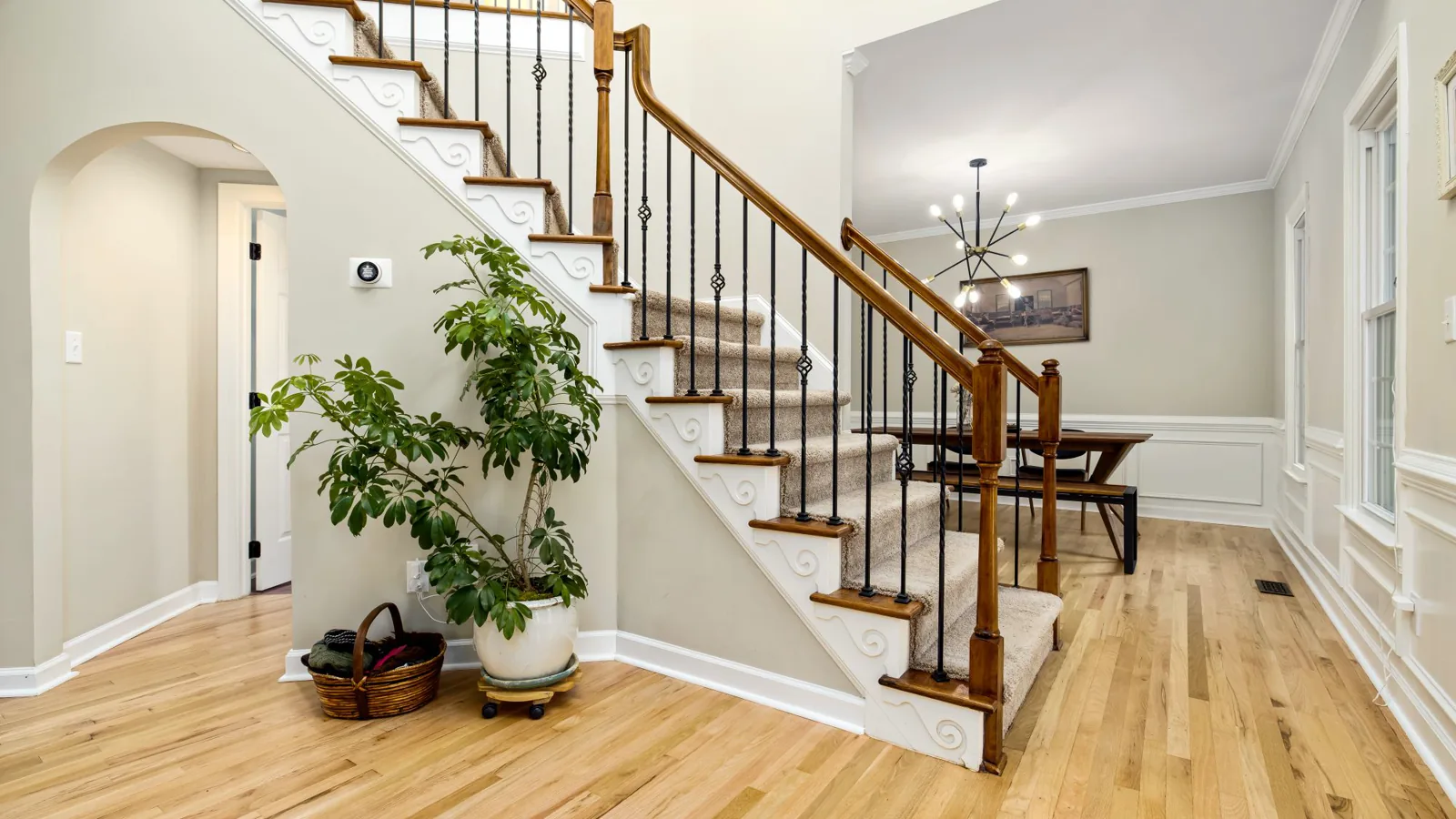
Going from carpet to hardwood stairs takes one of two routes. If sound oak treads sit under the carpet, you pull the carpet, fill the staple holes and refinish the wood. If the steps are pine, particleboard or damaged, you cap each step with a new hardwood tread and riser that covers the old one, and the frame underneath stays put.
The choice you make on the first day shapes every other decision: the nosing profile, the colour of the risers, whether the railing stays and how the stairs meet the floor at the top and bottom. This guide covers how to read what you have, the design calls worth making before work starts, the steps a stair crew follows, and what changes on a three-storey townhouse.
What is under your stair carpet?
Two houses on the same street can hide two different kinds of stairs. Before you choose a finish or a stain, find out what you are working with.
Oak treads in older houses
Many bungalows and two-storey homes built from the 1950s to the 1970s have solid oak treads under the carpet. Owners covered them for warmth or quiet, or to hide wear. Under the pad you may find tack strips, rows of staples and a dark band where the carpet edge sat for decades. If the oak is thick, flat and free of deep splits, it can be sanded and refinished.
Builder-grade steps in newer subdivisions
Many houses built from the 1980s onward in Brampton, Vaughan, Markham and Oakville came with builder-grade carpet on the stairs. Underneath, the treads are often pine, plywood or particleboard, cut with a rounded nose and never meant to be seen. These steps can’t be refinished into a wood stair. They need new treads and risers on top.
How to check yours
Lift the carpet at the top step, where it tucks under the nosing, and look at the edge of the tread. Then look at the underside of the stairs from the basement or the closet below. A solid board shows the same grain on its edge and its face. A stack of thin layers means plywood, and a grey, grainless edge means particleboard.
Should you refinish or recap your stairs?
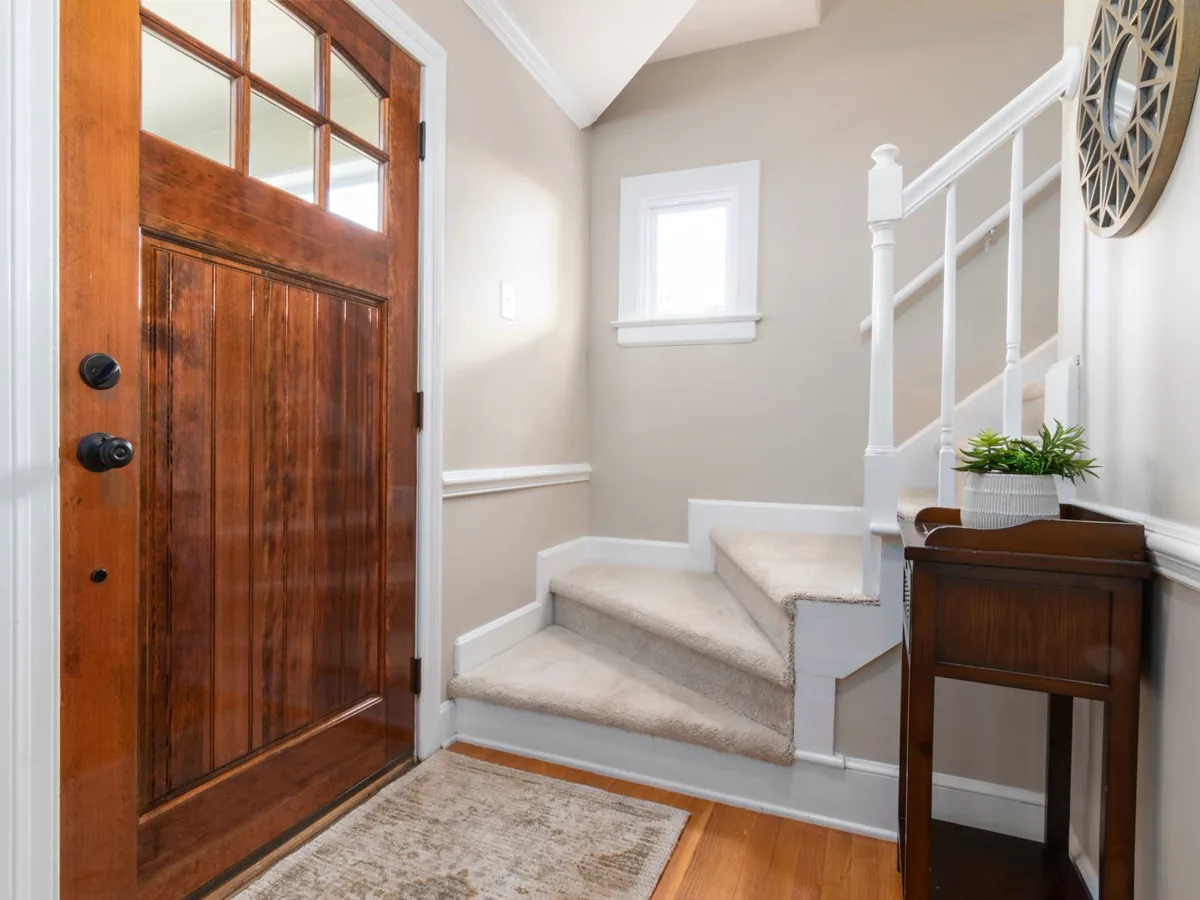
Once you know what is under the carpet, the route picks itself in most cases. Three options cover almost every staircase in the GTA.
| Route | Works when | What happens to the old steps | Look you get |
|---|---|---|---|
| Refinish the existing treads | Solid oak, sound and flat | Sanded, stained and sealed in place | Original oak, with some marks left from age |
| Recap (cap-a-tread) | Pine, plywood, particleboard or worn oak | Old nose cut back; new tread and riser cover the old step | New hardwood in any species and stain |
| Full new treads | Treads split, sag or sit loose on the stringers | Removed and replaced with full-thickness treads | New hardwood, with the frame repaired underneath |
Refinishing keeps the most original material and suits an older house where the oak is in good shape. Recapping is the common answer for builder-grade stairs, because it gives you new wood without tearing the staircase apart. Full new treads make sense when the steps themselves have failed, which shows up as a tread that rocks, dips or cracks when you stand on it.
A recap adds the thickness of the new tread to each step. A careful installer plans for that, so the bottom and top risers end up the same height as the rest of the flight. The same thinking applies to the floors around the stairs; our guide on whether to refinish or replace hardwood floors walks through the checks for the rooms at the top and bottom.
How do nosing, risers and stain change the look?
A few small choices decide whether the finished stairs look like part of the house or like an add-on.
Nosing profile
The nosing is the front edge of each tread. A rounded bullnose reads as classic and softens the step. A squarer eased edge looks crisper and suits modern trim. At the top of the flight, a flush stair nose joins the stairs to the hallway floor so the two surfaces sit level, with no lip to catch a toe.
Painted or stained risers
White risers under stained treads are a common look in GTA homes. They brighten a dark stairwell and line up with white baseboard and spindles. They also show scuffs from shoes, so pick a paint you can wipe clean and plan to touch it up. Stained risers that match the treads give a continuous wood look and hide marks better, though a narrow stairwell can feel darker with all that wood.
Matching the floor
Stairs look planned when they match the floor they land on. With hardwood, that means the same species and a stain mixed against a sample of the floor, checked in daylight. With vinyl plank or laminate, matching stair nosings and treads keep the colour running up the flight. Ask the crew laying your hardwood to bring a floor sample to the stair visit so the stain gets checked against the real thing. If the hall at the top has a pattern floor, our guide to planning a herringbone layout covers how the zigzag meets a straight stair nose.
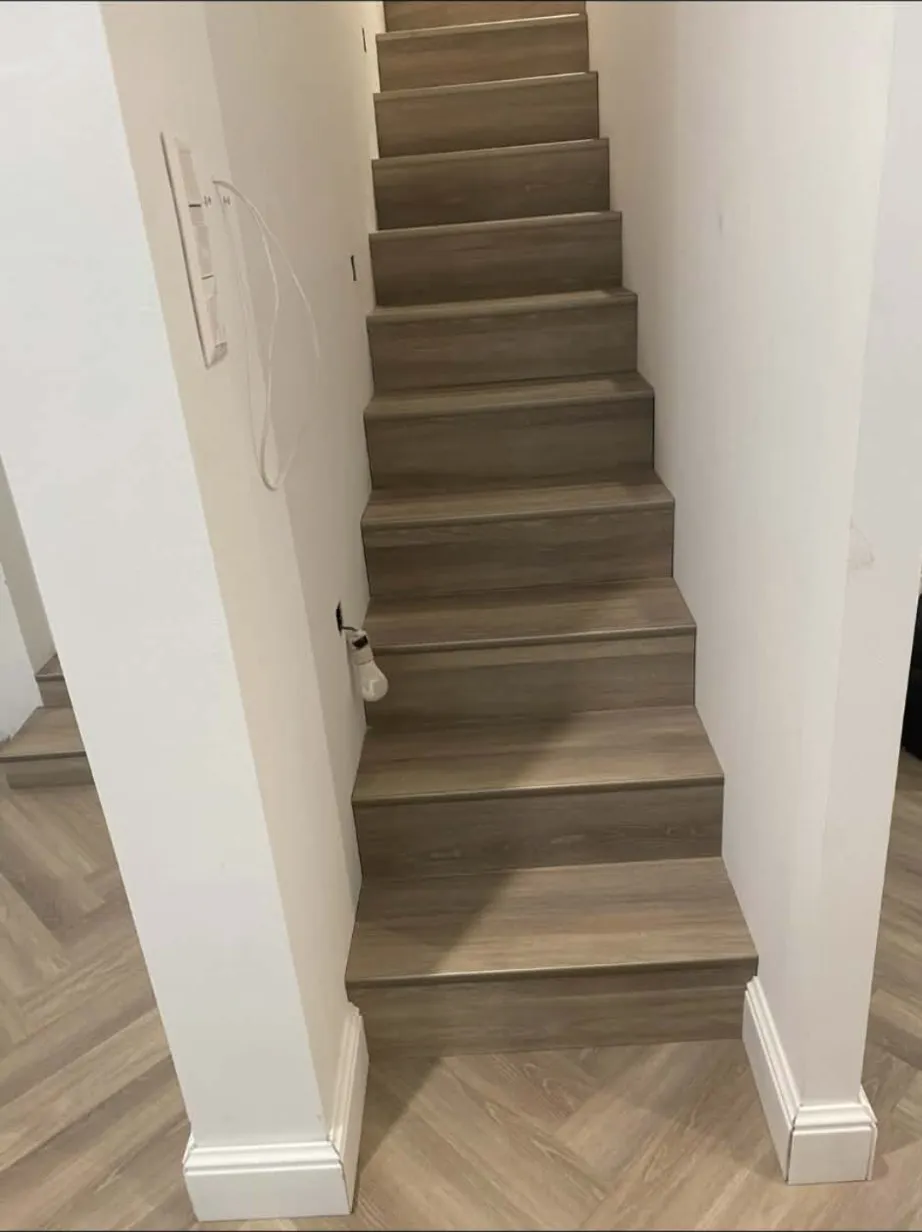
Sheen matters on stairs more than on a floor, because every scratch sits at eye level as you climb. The National Wood Flooring Association notes that a lower-sheen finish hides small scratches better than gloss, which is why satin and matte finishes suit treads.
Do the spindles and railing need to change?
Sometimes. Either way, this is the moment to decide. New treads next to a tired oak railing with square pickets can make the old parts look older. Changing spindles and newel posts later means working around finished treads, so many owners do it in the same job.
- Keep the railing: sand and restain it to match the new treads. This works when the rail is solid and you like its shape.
- Swap the spindles: black iron balusters under a stained oak rail are the look in the photo at the top of this guide, and they suit both older and newer houses.
- Replace posts and rail: a square or box newel post and a new handrail change the whole staircase. This is the bigger job, and the one that pays off on an open stair in a front hall.
The full list of railing, post and spindle work sits on our staircase renovation page.
How does a carpet-to-hardwood stair job run?
A recap follows the same order on most staircases. Refinishing skips the cutting and fitting and goes straight to sanding after step 2.
- Strip the carpet. The crew lifts the carpet, pad and tack strips and pulls every staple.
- Check the frame. Loose or squeaky steps get screwed down to the stringers before anything covers them.
- Cut back the old nose. On a recap, the overhanging nose is trimmed flush with the riser so the new tread sits flat.
- Measure each step on its own. Walls in a lived-in house are seldom square, so each tread and riser gets cut to fit its own opening.
- Fit risers, then treads. Each piece is glued and fastened, working from the bottom step up.
- Stain and finish. Unfinished treads get stained to match the floor and sealed with several coats, which need time to dry between each one. Prefinished treads skip this step.
- Finish the details. Railings, spindles and posts go in, and trim covers the joint where the steps meet the wall.
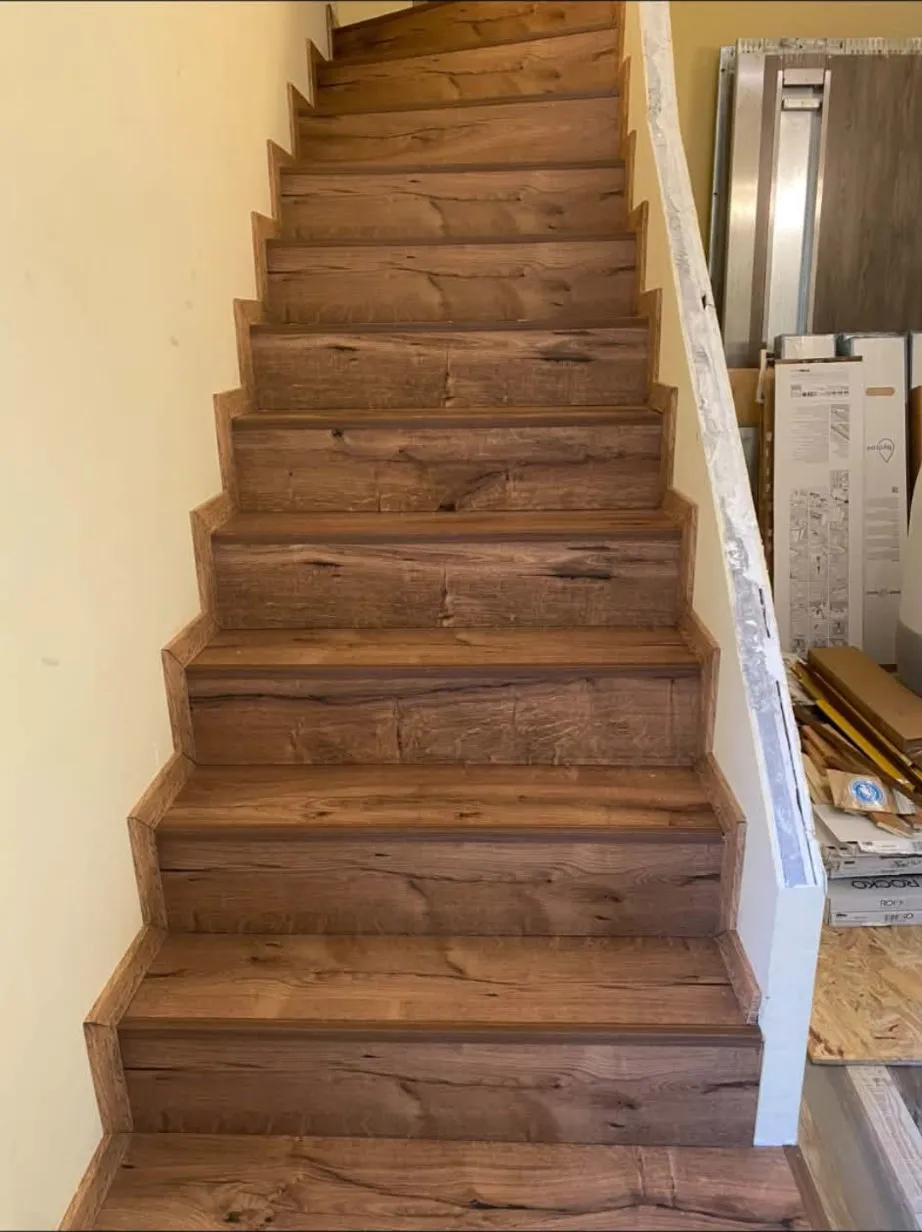
Plan on three to four days per flight, and the same for a flight with a landing. Our own installers do the work, with no subcontractors, and the job carries our 2-year warranty. To see how stairs fit around a wider floor project, read how long a flooring installation takes.
What changes on a townhouse with three flights?
Townhouses stack their rooms, so the stairs carry everyone, every day. A three-storey freehold townhouse in Cornell or Wismer often has a flight from the entry to the main floor, another to the bedrooms and sometimes a third down to the basement. Each one counts as its own flight, at three to four days per flight.
Three decisions matter more here. First, choose one stain and one riser colour for every flight, since you see two flights at once from most landings. Second, decide where carpet ends: if the bedrooms keep carpet, the top landing needs a clean transition where wood meets pile. Third, think about the order. Doing the top flight first means the crew never walks fresh finish to reach the next one. Our stair work for multi-level townhouses plans that order with you at the measure. We work on stairs across York Region, from townhouse stairs in Markham to curved and open flights in Woodbridge and Maple homes in Vaughan.
Are hardwood stairs slippery?
They can be in socks, which is the main complaint after a switch from carpet. The finish and the nosing make most of the difference.
- Pick a low sheen. Satin and matte finishes give socks and paws more grip than high gloss.
- Ask about an anti-slip additive. Some finishes take a fine grit in the top coat that you feel underfoot more than you see.
- Keep the nosing consistent. Every nose should project the same amount, so your foot lands where it expects to.
- Add a runner if you want one. A stair runner over hardwood treads gives grip and quiet for older dogs and young kids, and it comes off when they no longer need it.
Rise, run and handrail heights in Ontario homes fall under the province’s Building Code, and municipal building officials enforce it. A recap keeps the existing stair frame, so the main thing to watch is that the new treads leave each riser at the same height.
Stair questions
Can you put hardwood over carpeted stairs?
Not over the carpet itself. The carpet, pad, tack strips and staples come off first. After that, new hardwood treads and risers can cap the old steps without removing the staircase.
How long does it take to change carpet stairs to hardwood?
Plan on three to four days per flight, and the same for a flight with a landing. A townhouse with three flights adds up flight by flight.
Should stair risers be painted white or stained?
White risers brighten a stairwell and match white trim, but they show shoe scuffs. Stained risers hide marks and give a continuous wood look. Both work, so choose by the light in your stairwell and how much touch-up you want to do.
Can stairs match a vinyl or laminate floor?
Yes. Matching stair nosings and treads carry the floor colour up the flight. You can also choose hardwood treads stained to sit close to the floor colour.
What affects the cost of replacing stair carpet with hardwood?
The number of steps and landings, whether you refinish or recap, the wood species, the riser finish and any railing, spindle or post work. Our breakdown of flooring cost factors explains each one, and the measure and written quote are free.